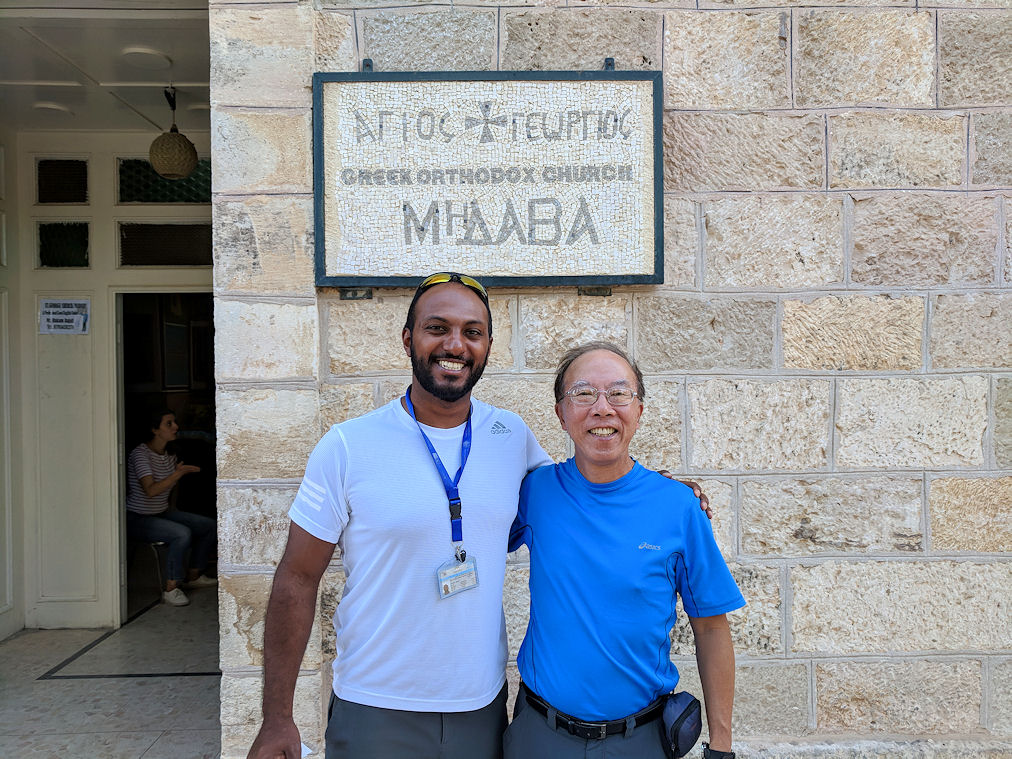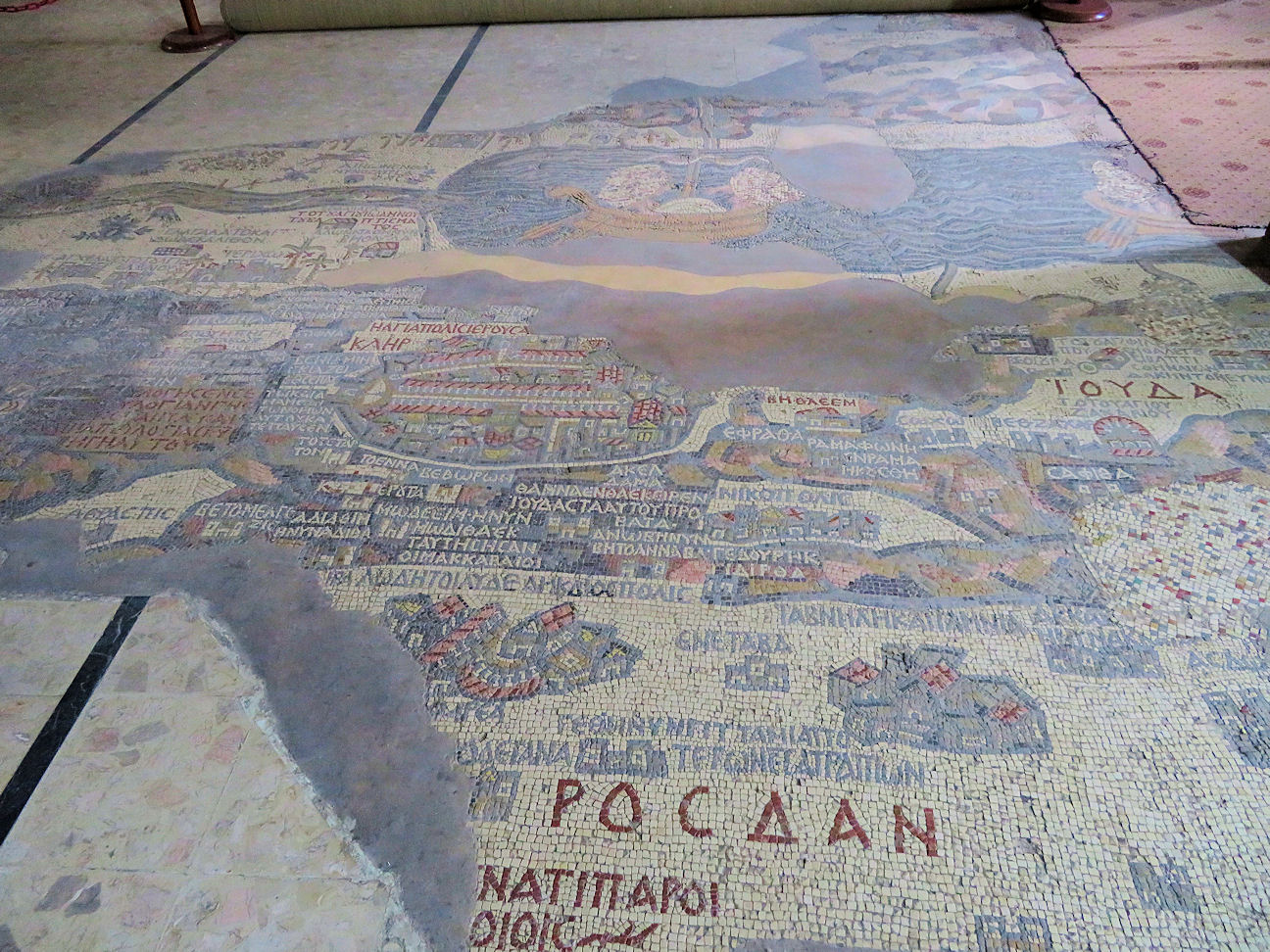
Madaba and Mount NeboWe returned for the night to the Jordan Intercontinental Hotel. The next day we drove south to Madaba which is known for its mosaics. Ayman told us that the population of Christians in Madaba used to be 70% but now it has declined to 30%. As we drove around town, we guessed that the percentage is much lower if you used the percentage of woman wearing headscarves and long cloaks (practically 100%). Madaba is noted for its churches and ancient mosaics. The mosaics were made choosing stones with natural colors. Therefore they maintained the colors over the centuries. The Mosaic School was established in the 1960s to train locals in the conservation and restoration of these ancient mosaics. The most famous mosaic is a map of the region dating from the 6th century and preserved in the floor of the Greek Orthodox Basilica of Saint George. The map depicts hills and valleys, villages and towns in the Levantine region, including the Byzantine Jerusalem.


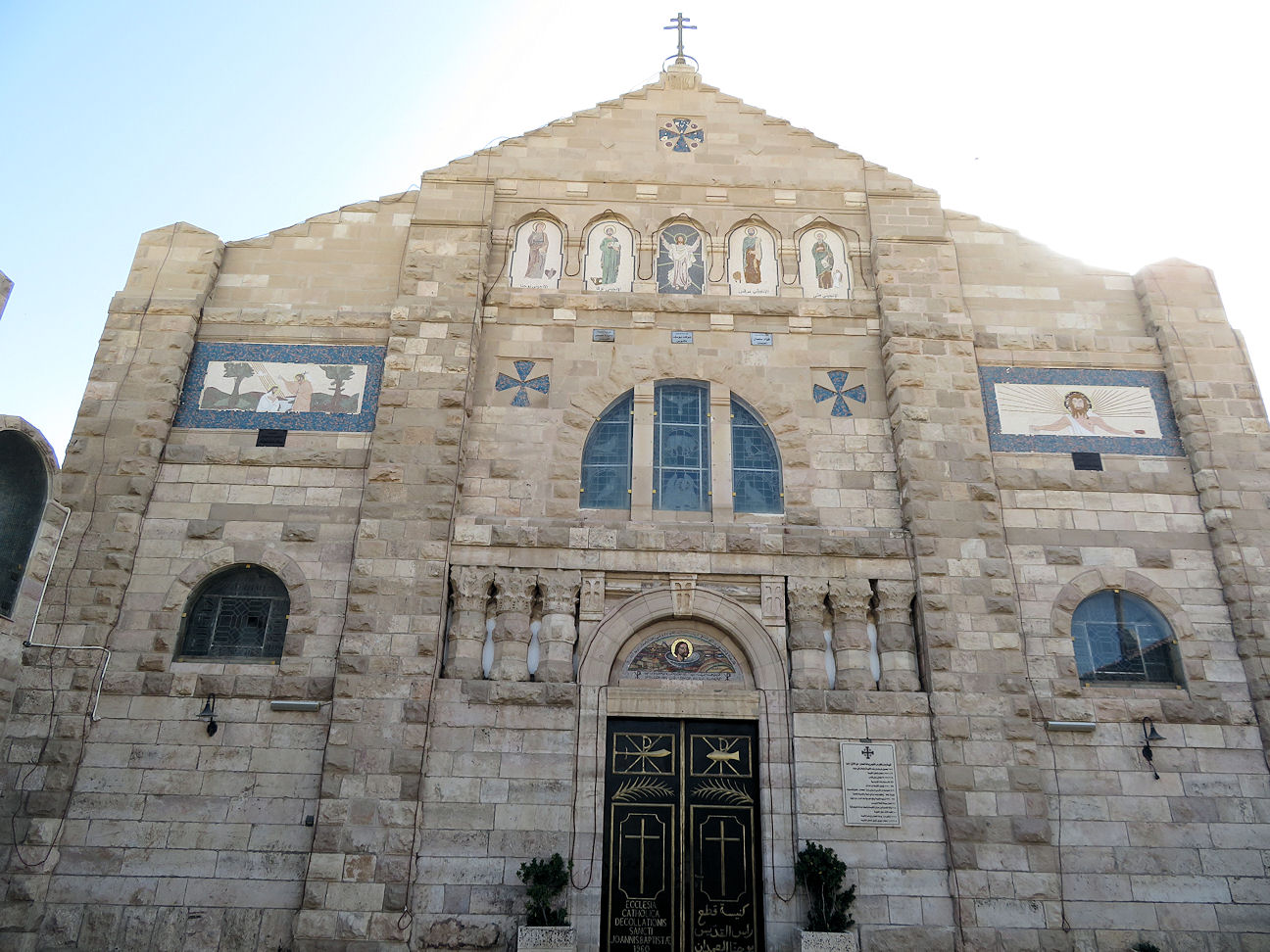
(Right) Mosaic on pillar in St. George Church One thing that got stuck in my head (ha, ha) was Church of St John the Baptist in Madaba. The entire church was dedicated to the beheading of John the Baptist.
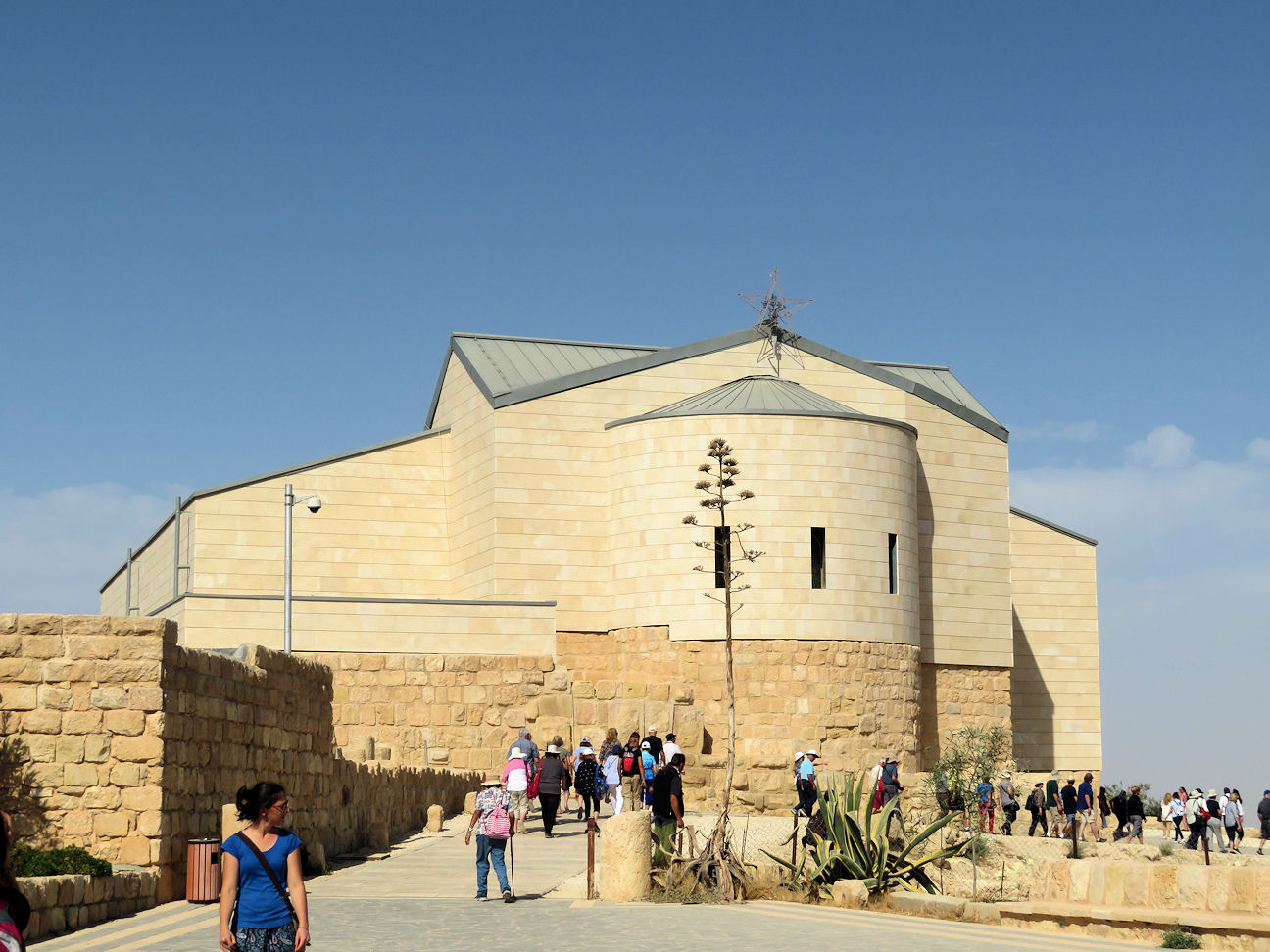
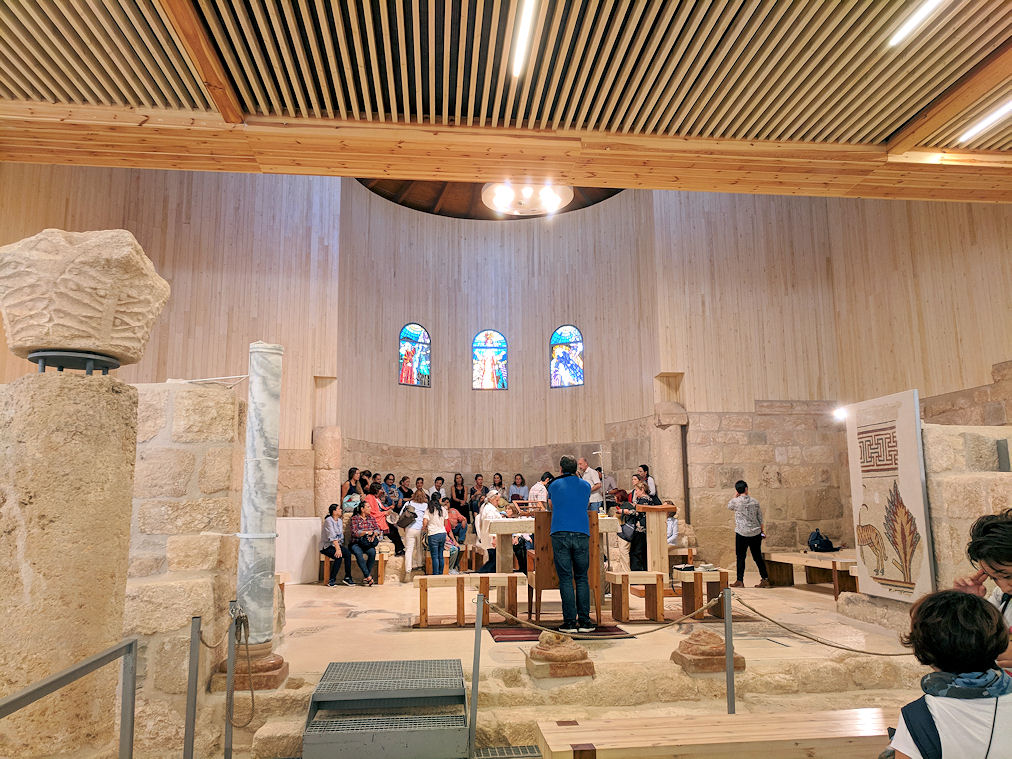
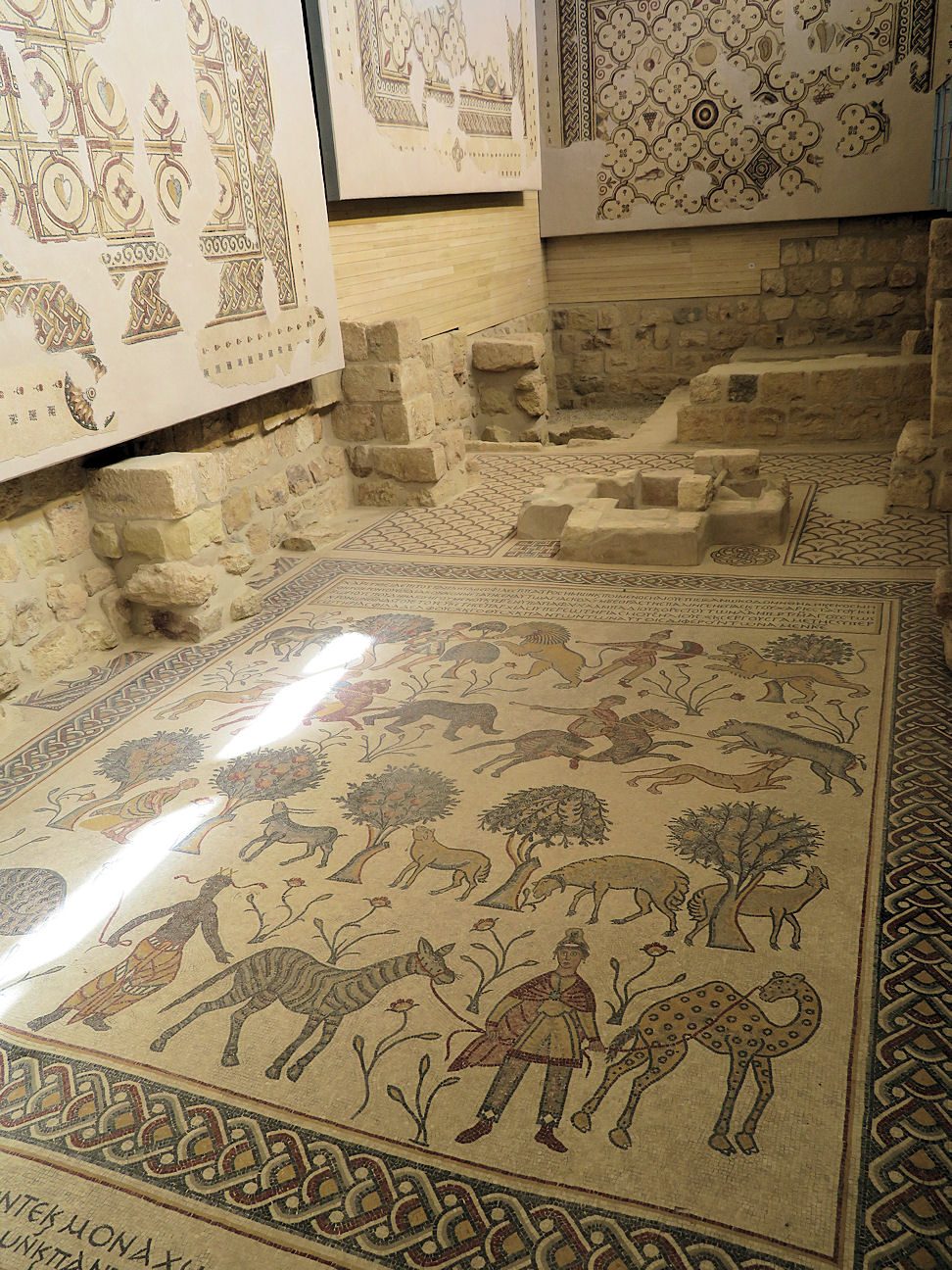
We drove to Mount Nebo, 2330 feet above sea level. According to the Bible, it is the place where Moses was granted a view of the Promised Land and lived out his final days. The view from the summit provides a panorama of the Holy Land and the Jordan River Valley. Unfortunately the visibility was very poor that day. In the 6th century AD, monks constructed a Byzantine monastery on Mount Nebo. While the building is no longer there, some of the mosaics from this time period have been preserved. In 1993, Mount Nebo was purchased by the Franciscan Order who restored the site. It is an active Franciscan monastery/church today. In the modern chapel, built to protect the site and provide worship space, remnants of mosaic floors from different periods can be seen. A serpentine cross sculpture (the Brazen Serpent Monument) atop Mount Nebo was created by Italian artist Giovanni Fantoni. It is symbolic of the bronze serpent created by Moses in the wilderness (Numbers 21:4–9) and the cross upon which Jesus was crucified (John 3:14).

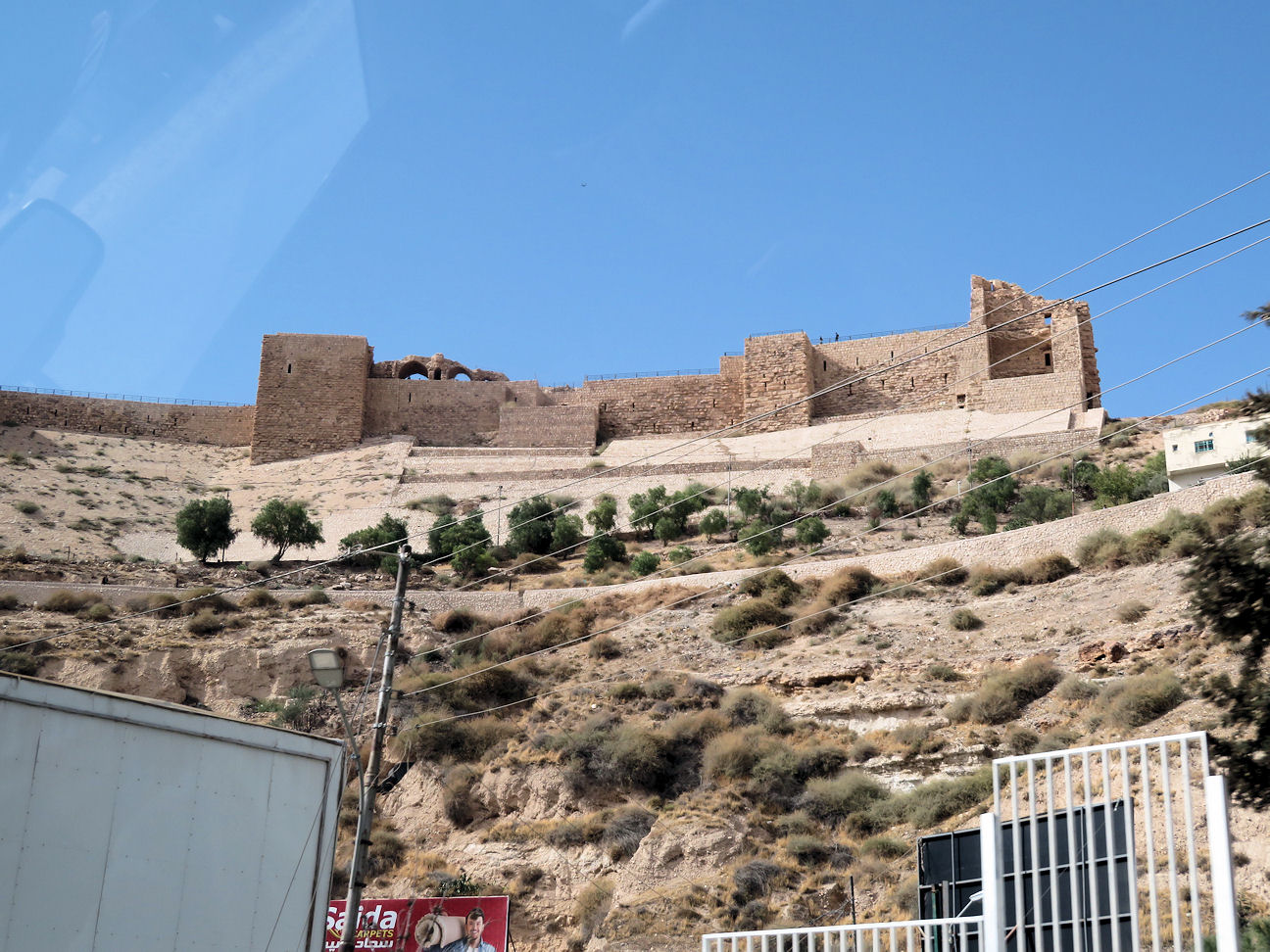
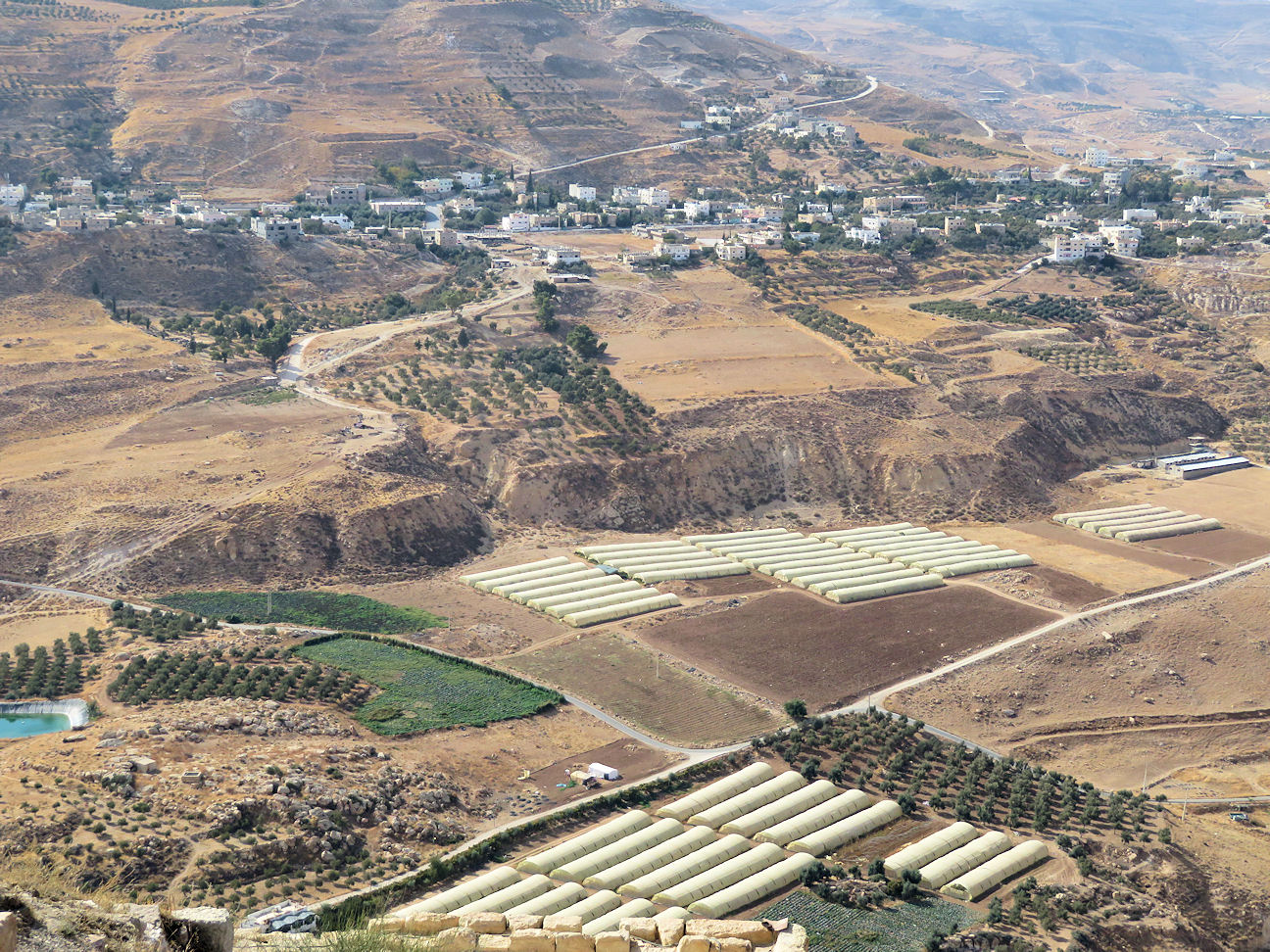
We continued south to the ancient crusader castle in Karak. The castle is at the top of a hill and it provided a great view of the surrounding.
Finally we headed to the Dana Nature Reserve overlooking Wadi Dana. We stayed at the ecolodge there before our start of the trek to Petra the next day.
|