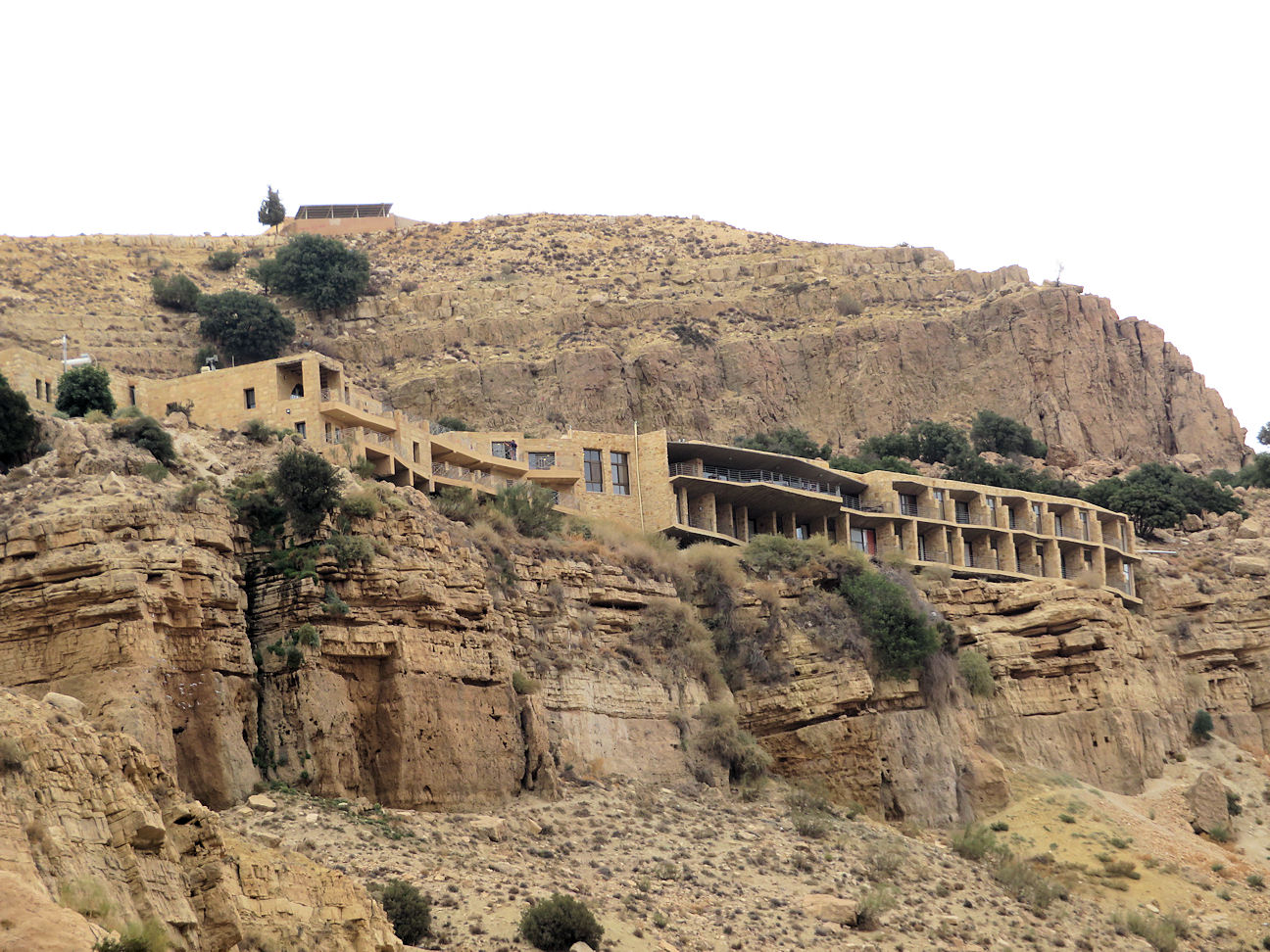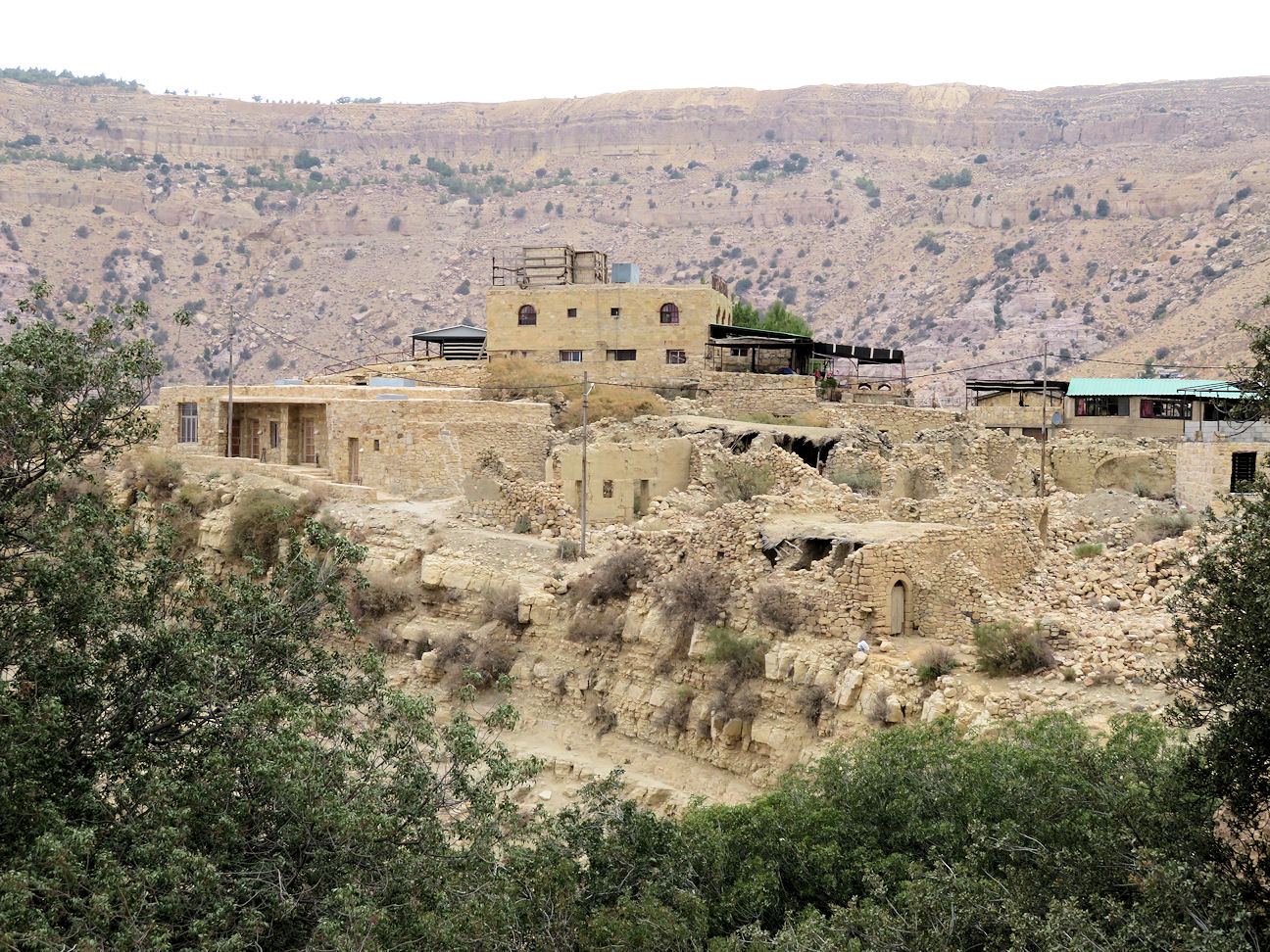
Dana to Feynan EcolodgeThe Dana Ecolodge is located at the edge of the Dana Biosphere Reserve at 4000 ft above sea level. It is easily accessible via a gravel road off the main highway. It is a two-story building nested on a cliff overlooking the Wadi (Valley) Dana. There is an abandoned village closeby - villagers moved up the valley to be closer to work in a cement factory. Recently the government is helping to fix up the abandoned buildings for tourists.
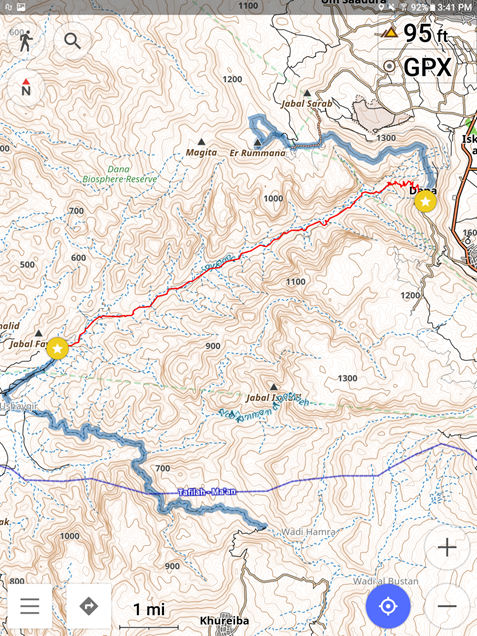
Dana is the starting point of our 5-days trek to Petra. In the map below, the circled stars and colored lines mark the destinations and the treks, respectively. On Day 1, we hiked from Dana to the Feynan Ecolodge (8.4 miles, 3750 elevation loss). Day 2 was our "day off", staying in the lodge. (In MTS’s regular trek, we would hiked from Feynan Ecolodge to a place called Ras Al-Feid, 11.5 miles, ascent 4460 ft and descent 1575 ft). On Day 3, we were driven from the Lodge to a place called Ras Al-Feid (start of the blue line), where we started our hike towards Ghbour Whedat (10 miles, ascent 2450 ft and descent 3020 ft). On Day 4 we hiked from Ghbour Whedat to Little Petra (8.4 miles, ascent 2000 ft, descent 1850 ft). On Day 5 we hiked into Petra in Wadi Musa (11 miles). All the destinations are accessible by 4-wheel drive trucks. Our luggage was put in trucks in the morning and we picked them up at the end of the day. We only carried what we needed (a daypack with clothes and lots of water) during the day for the hikes.

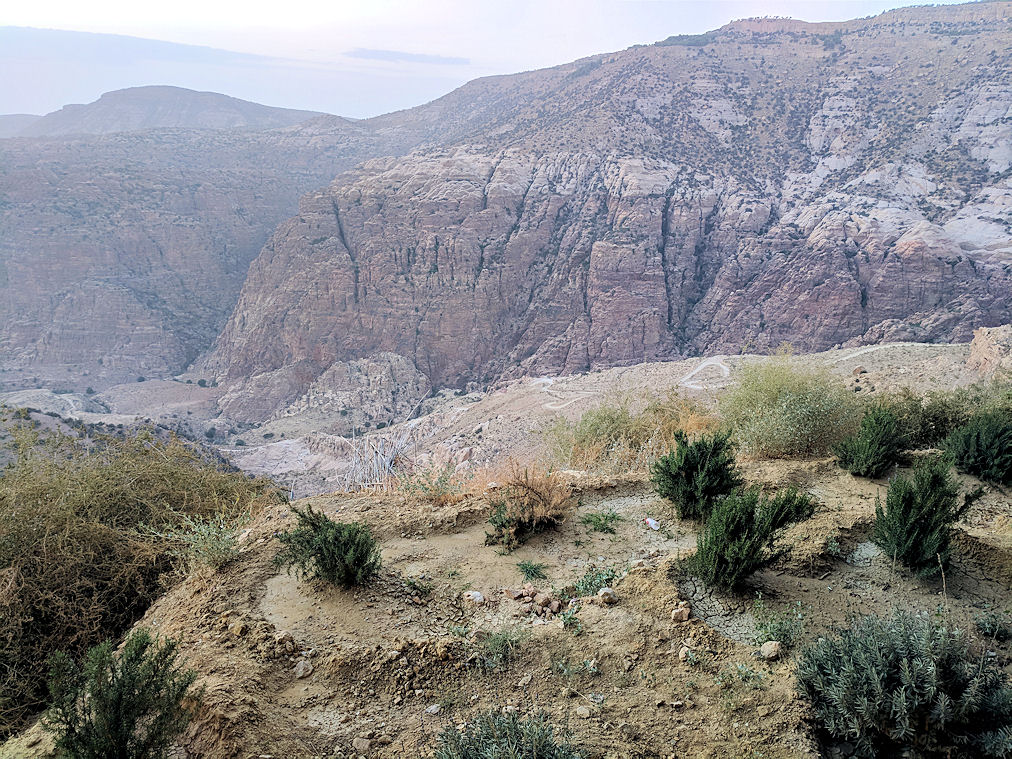
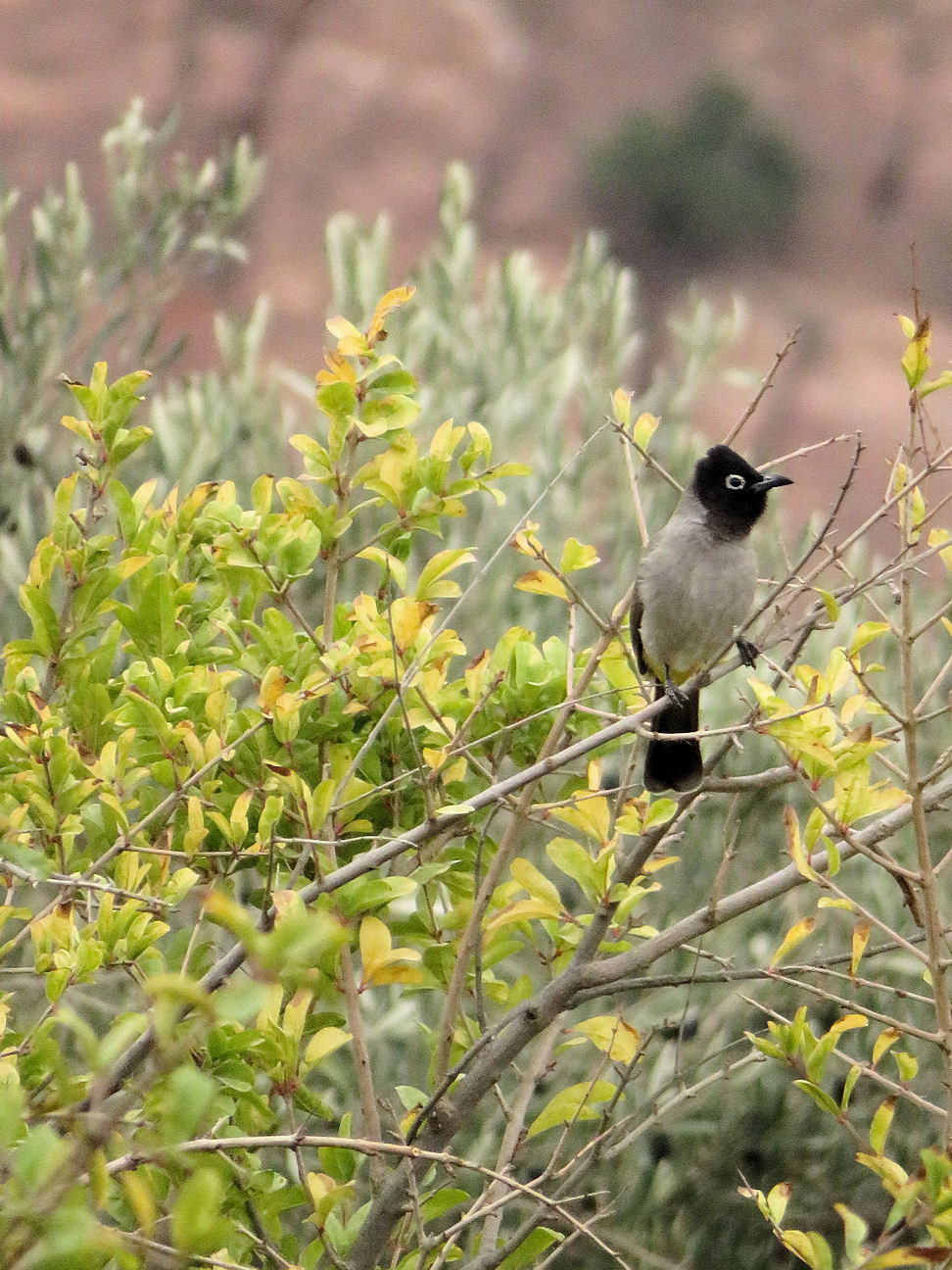
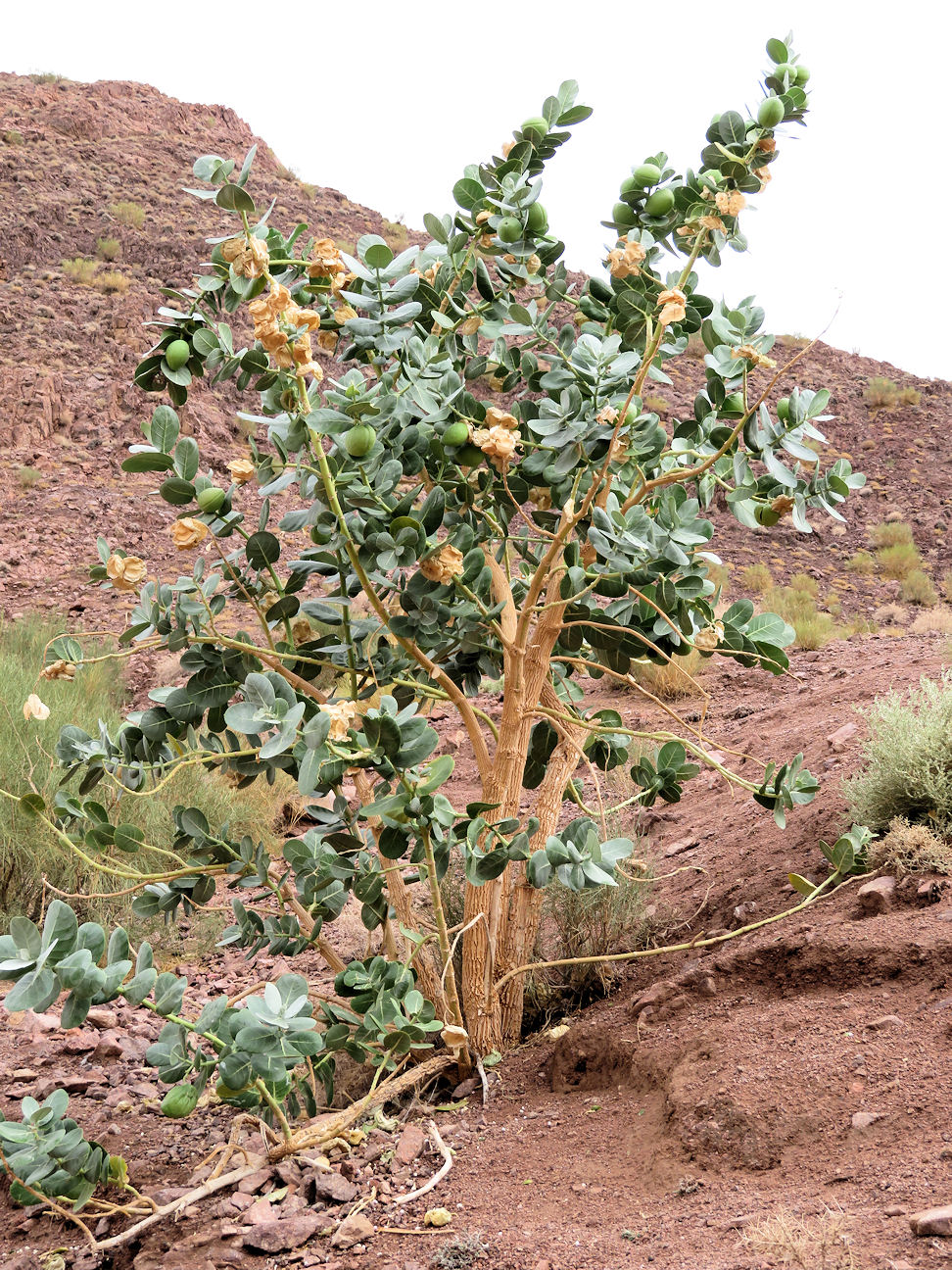
The trail drops steeply at first and then levels to a more gradual descent through the Dana Biosphere Reserve towards Feynan Ecolodge. Soon after we started, we saw our first Jordanian bird, the white spectacled bulbul. There was not much vegetation since this area does not get a lot of rain (Ha!!). One interesting tree is the Apple of Sodom. They are 10-20 ft tall trees scattered around the dry landscape. The flowering trees bear hollow green globes which contain a toxic milky sap that is extremely bitter and poisonous.
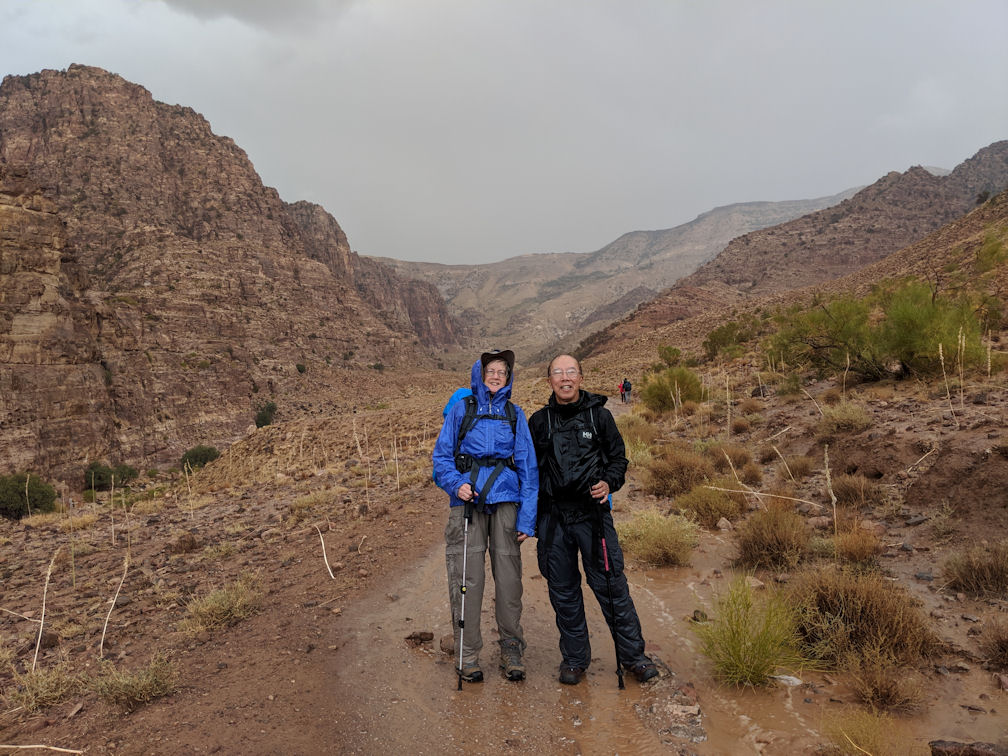
The day started off sunny but it became cloudy within a couple of hours. Then the sky darkened and thunderstorm with rain came with strong winds. We had put on our rain jackets, but soon the rain was running in rivulets down into our socks and hiking boots. Squish, squish, squish! Fortunately the rain covers for our packs worked perfectly and we kept our cell phones and cameras dry. It was pretty wild. For a while we were sand blasted by the strong winds. We saw lightning closeby; they were a bit too close for comfort. We even had a spell of blue hail. Fortunately the temperature stayed warm and so we were never cold even though we were totally wet. The trail crisscrossed dry stream beds. Pretty soon we saw water coming down the dry stream beds. Ayman said we had to cross to the other side of the stream. So he ran ahead, outrunning the beginning of the stream/flood to cross to the other side as it headed down the dry stream bed. David followed, just crossing ahead of the stream. Sally, lagging behind, had to run fast to also outrun it. We were not in danger since the stream/flood was only ankle deep. Later on we crossed the stream over and over again - the stream was not well confined as there are several water channels. At this point, the stream beds were full of water (still about ankle deep). We were nearing a Bedouin encampment and 3 little boys came running up the wadi to gather firewood for moms. Sally tried out her Arabic – “Momtaz!” (Excellent!). The kid was puzzled. "Mountains?" He said (obviously his English far superior to her bit of Arabic). Ayman began gathering rocks and tossing them into the one-inch stream so we could cross without sopping our boots. Sally followed suit, as did the little boys, happily making big splashes. David hung back, not playing the game.
We passed the first Bedouin tents which looked like homeless encampments in Seattle, with garbage strewn around. Later Ayman, always the diplomat, would characterize this settlement: “I would say they are not lucky.” He also asked us not to take photos of the Bedouins (in general and not just at this particular situation) unless we asked for permission first - they are tired of too many tourists taking photos. One woman came out of a tent and spoke quickly with Ayman. She says she would make us coffee (a Bedouin tradition of hospitality), but told us we should keep going because the stream was rising. We also abandoned the stepping stone "game" to save time. Besides it didn't matter whether we stepped into the shallow stream or not. Our boots were soaked anyway. '
While we were hiking, we filmed the head of a flash flood.
Even though the water was not very deep in this case, you can appreciate its power -- it pushed rocks and plants as it advanced. (All these were fun and adventurous, but after we arrived the Feynan Ecolodge, we learnt the sad news that the same weather system had caused huge flash floods in some narrow canyons in the Dead Sea region, resulting in the death of eighteen people.)
|