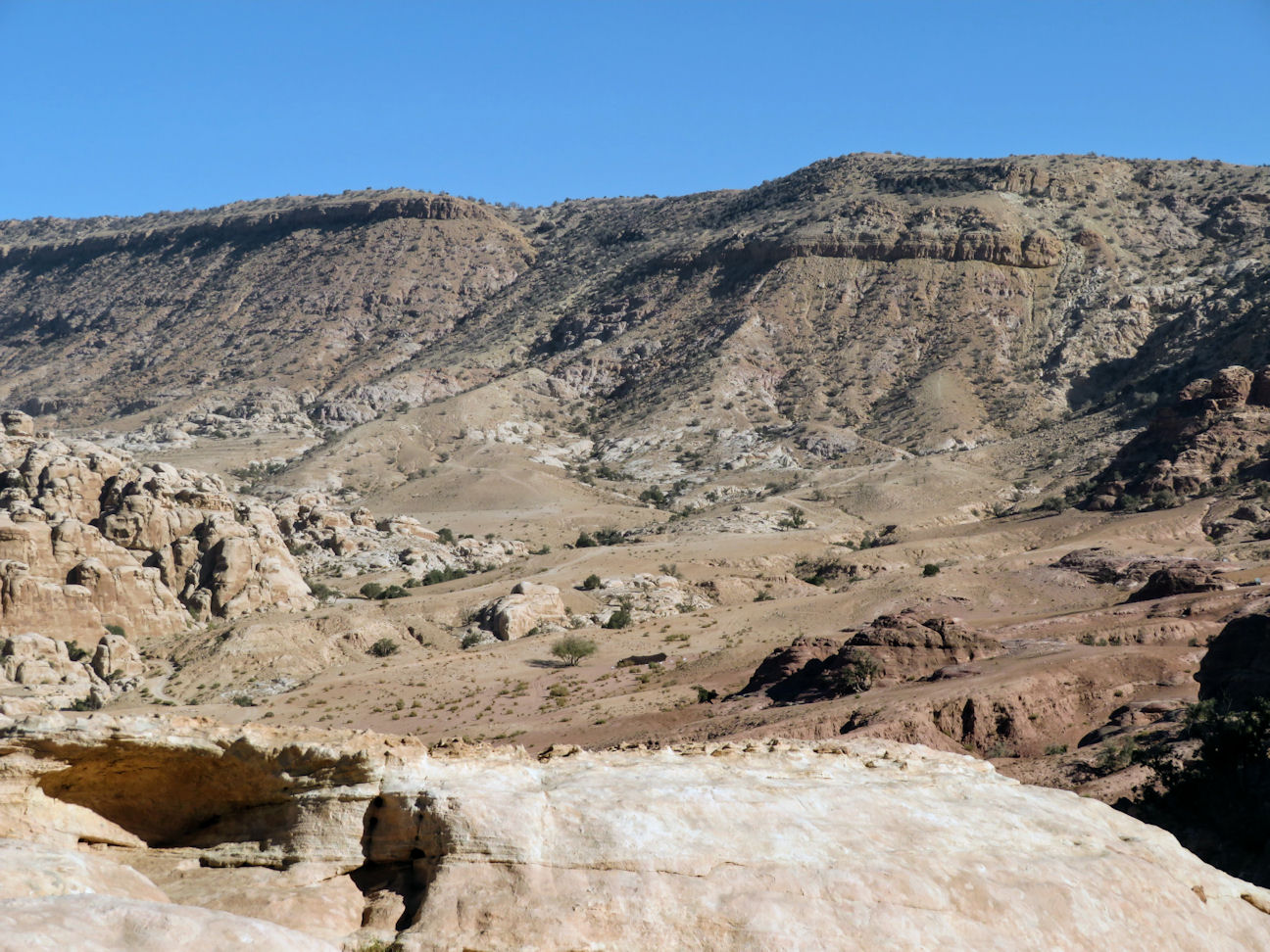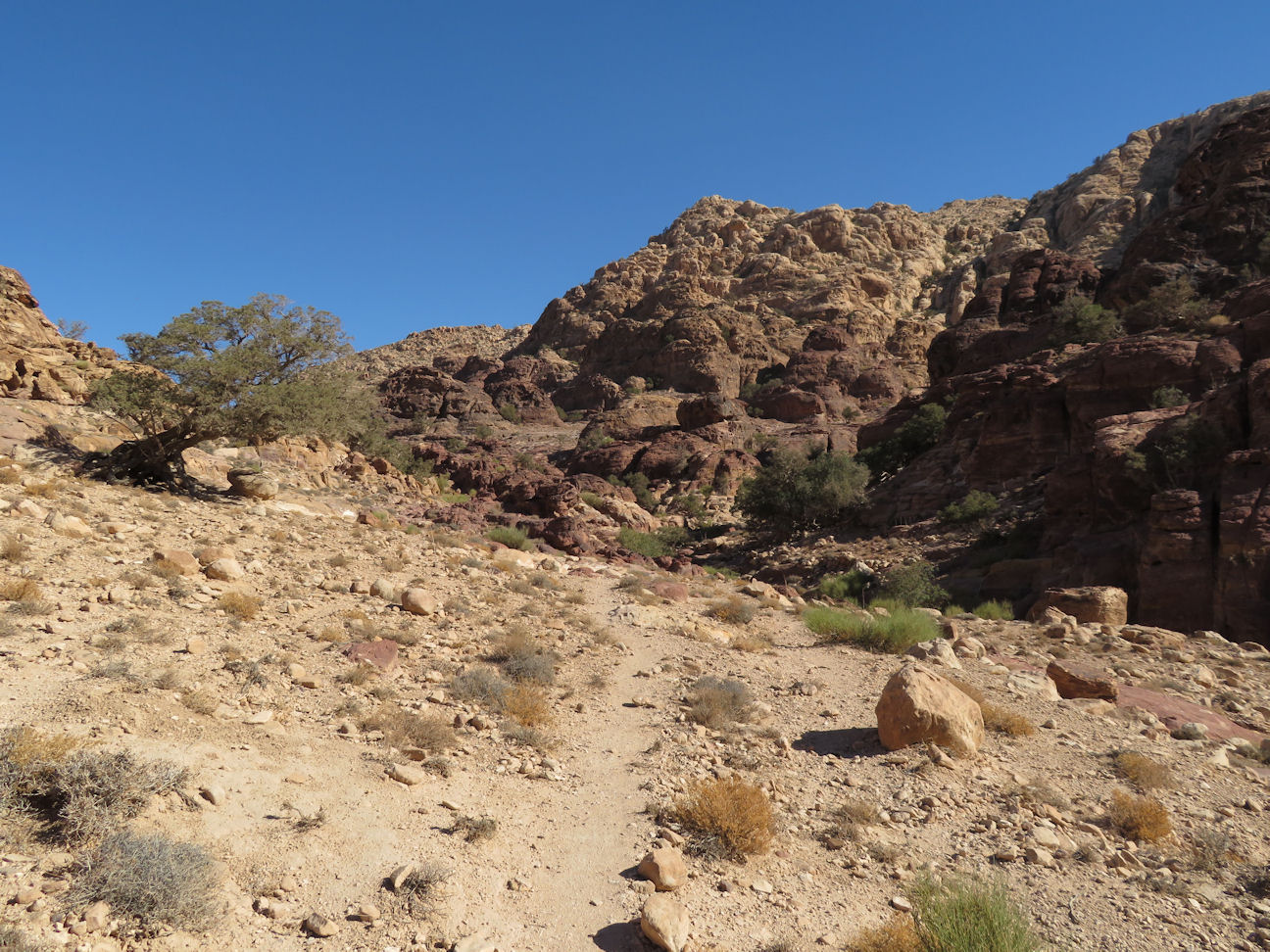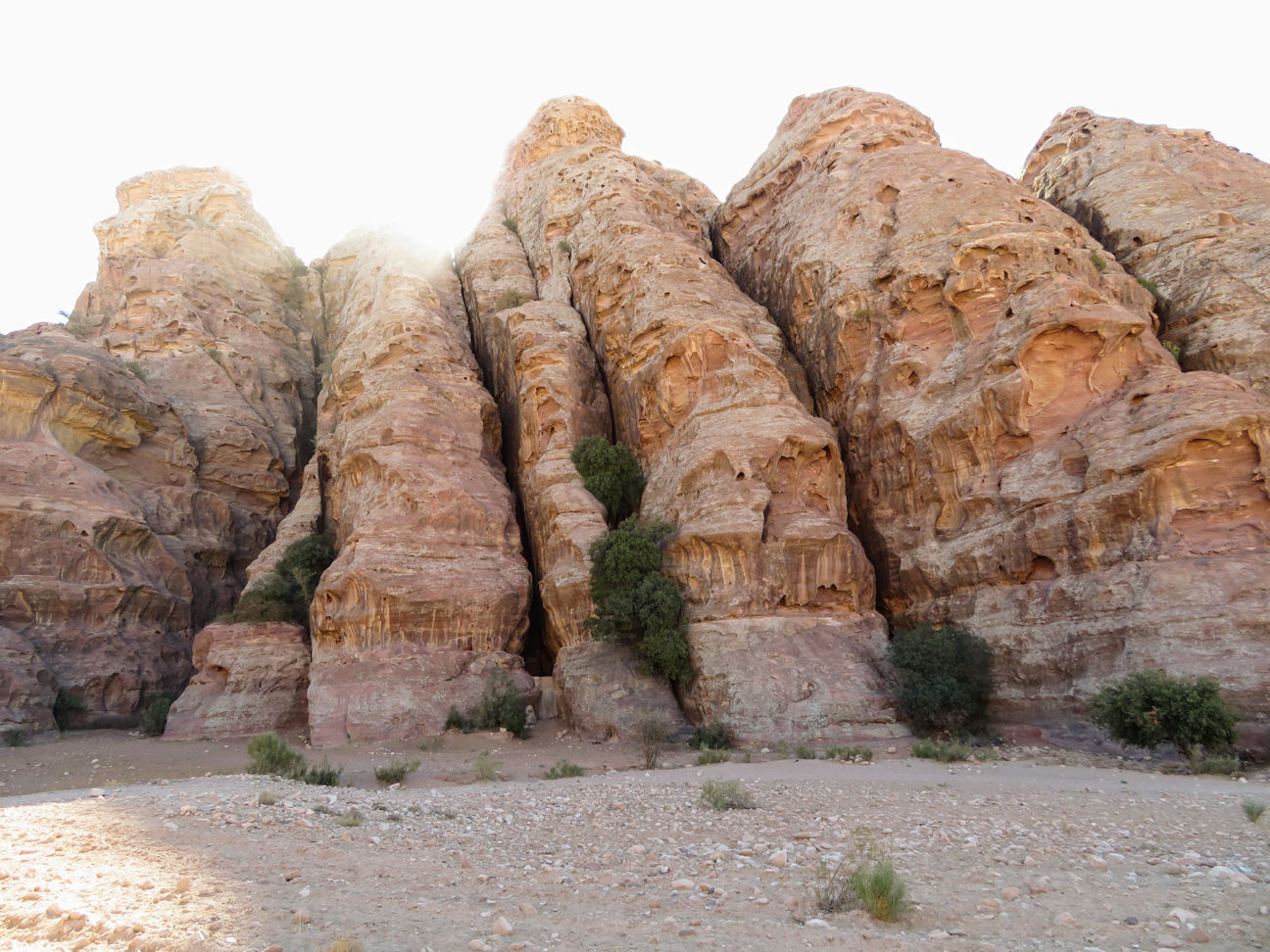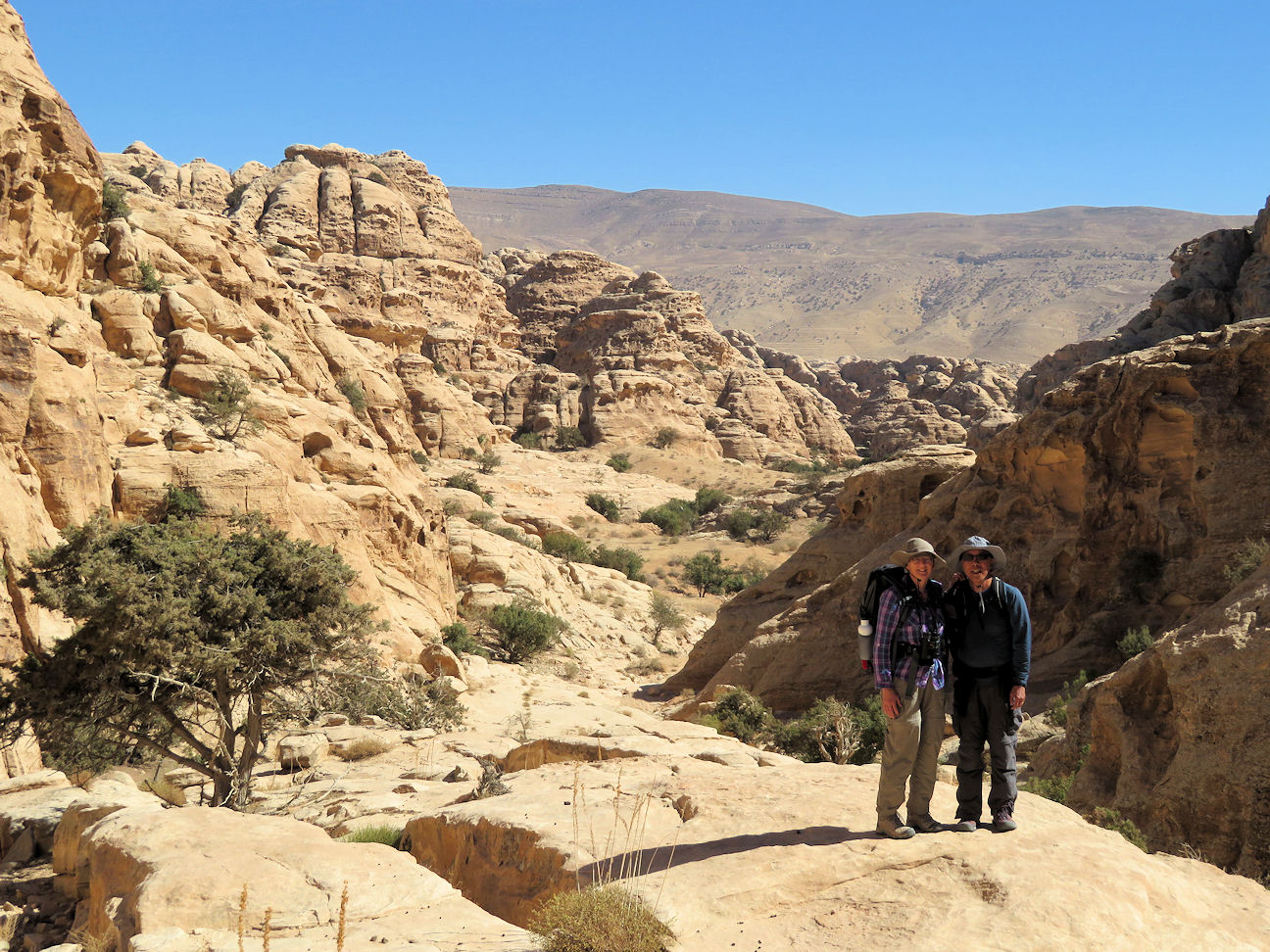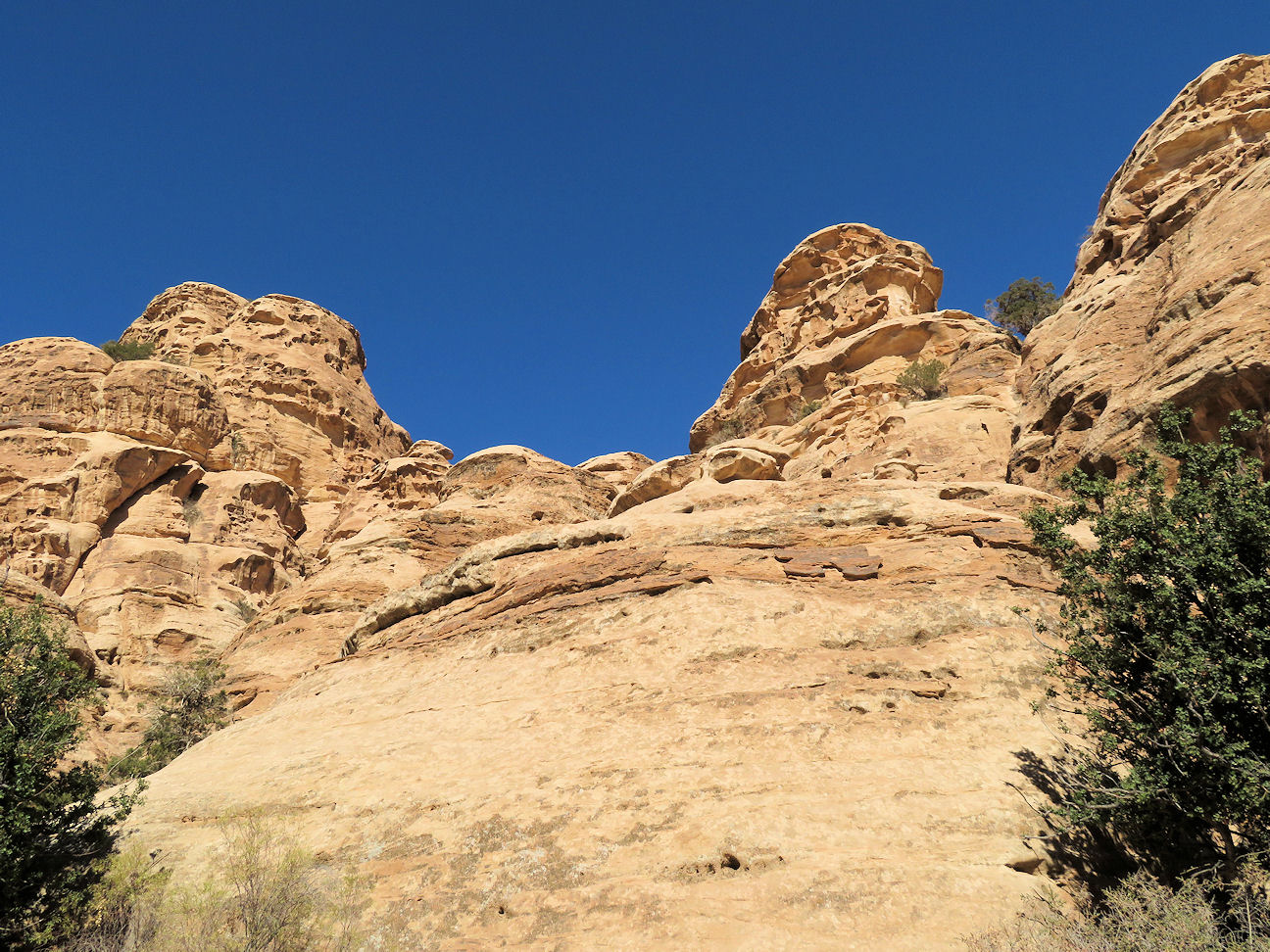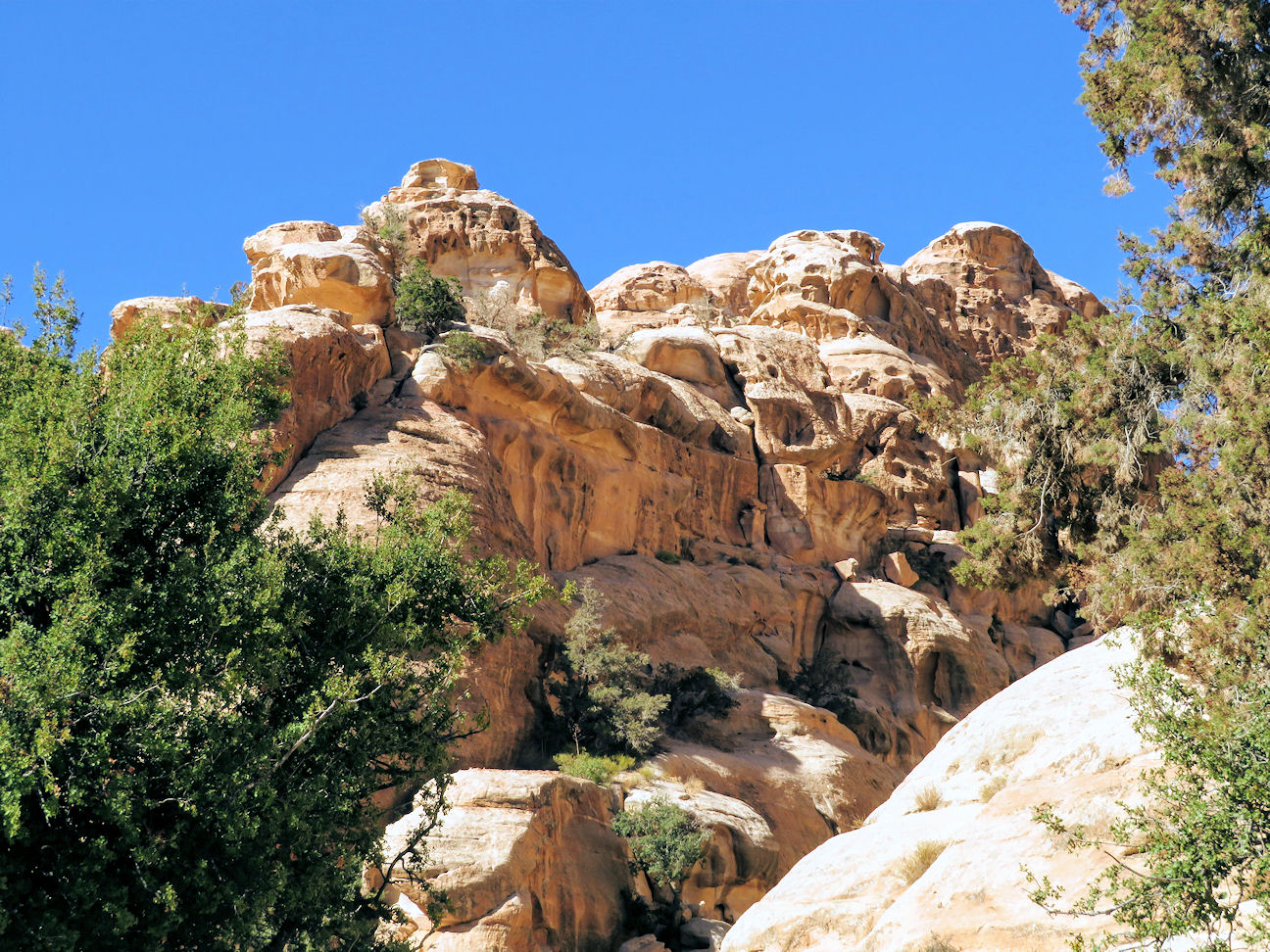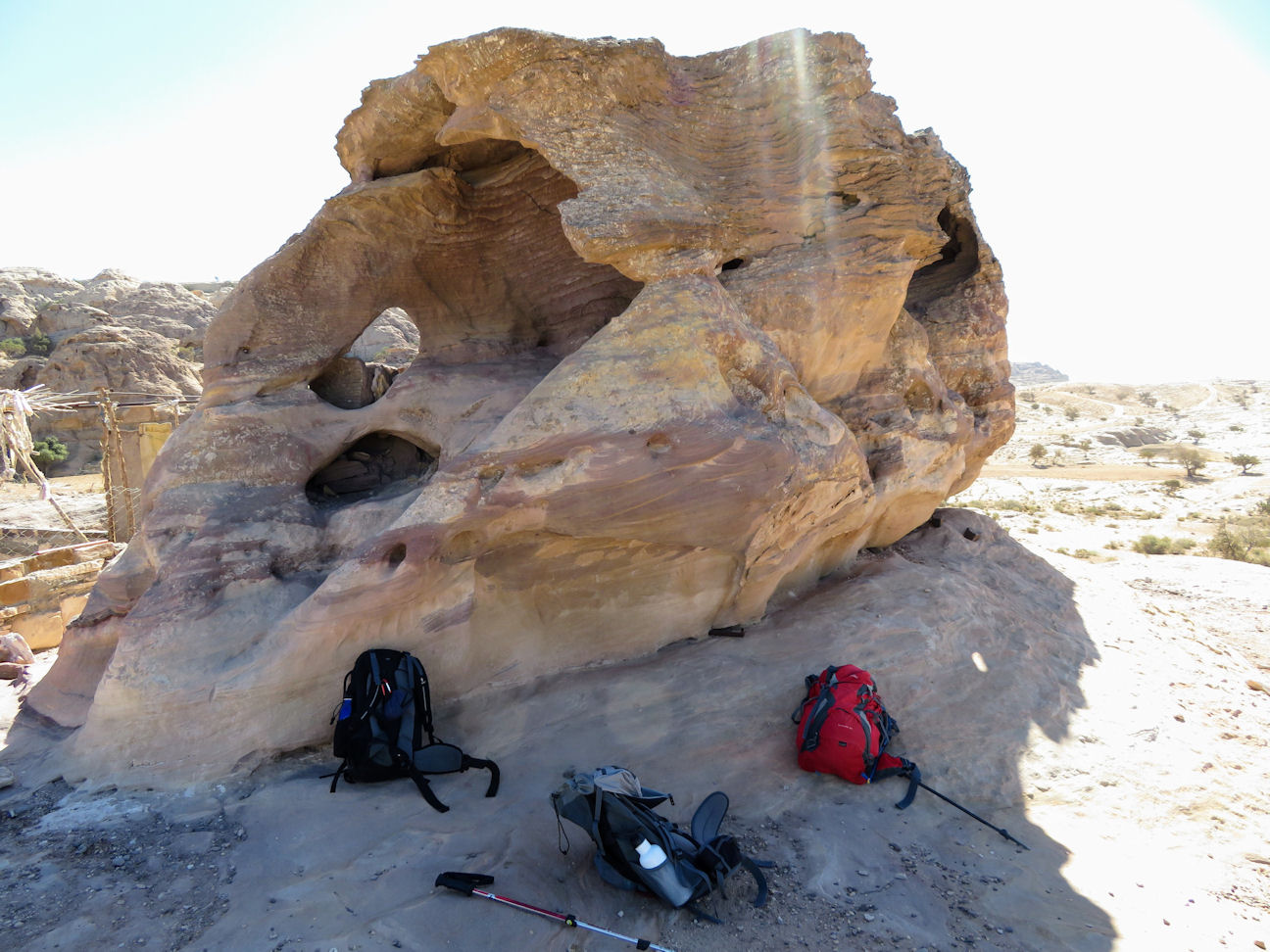
Little PetraOur itinerary for this day is to hike to Little Petra and stay in the Seven Wonders Bedouin Camp nearby. It was going to be an easy hike (8.4 miles; ascent 2,000’, descent 1,850’). We still have spectacular mountains, but we started to see columns and rock formations that I suspected were inspirations for the Nabataean's Petra. We hiked along the Jordan Trail which Ayman helped to establish. This is the first time that my app Osmand (Open Street Map) fails to show the entire trail. I guess that the trail is very new. There was only a group of French hikers on this trail (unlike the jam-packed Inca Trail!), but they went a different way after a while.
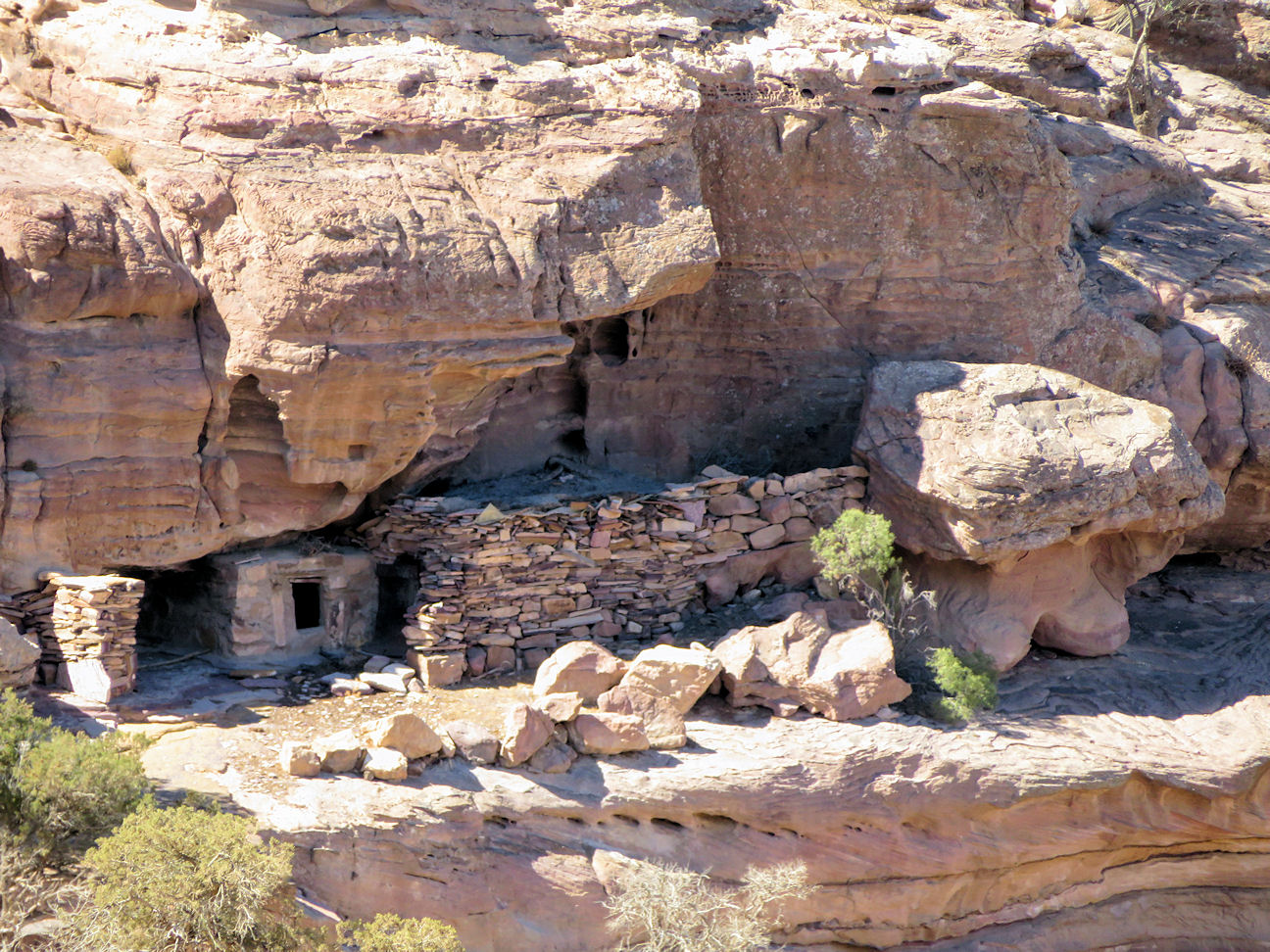
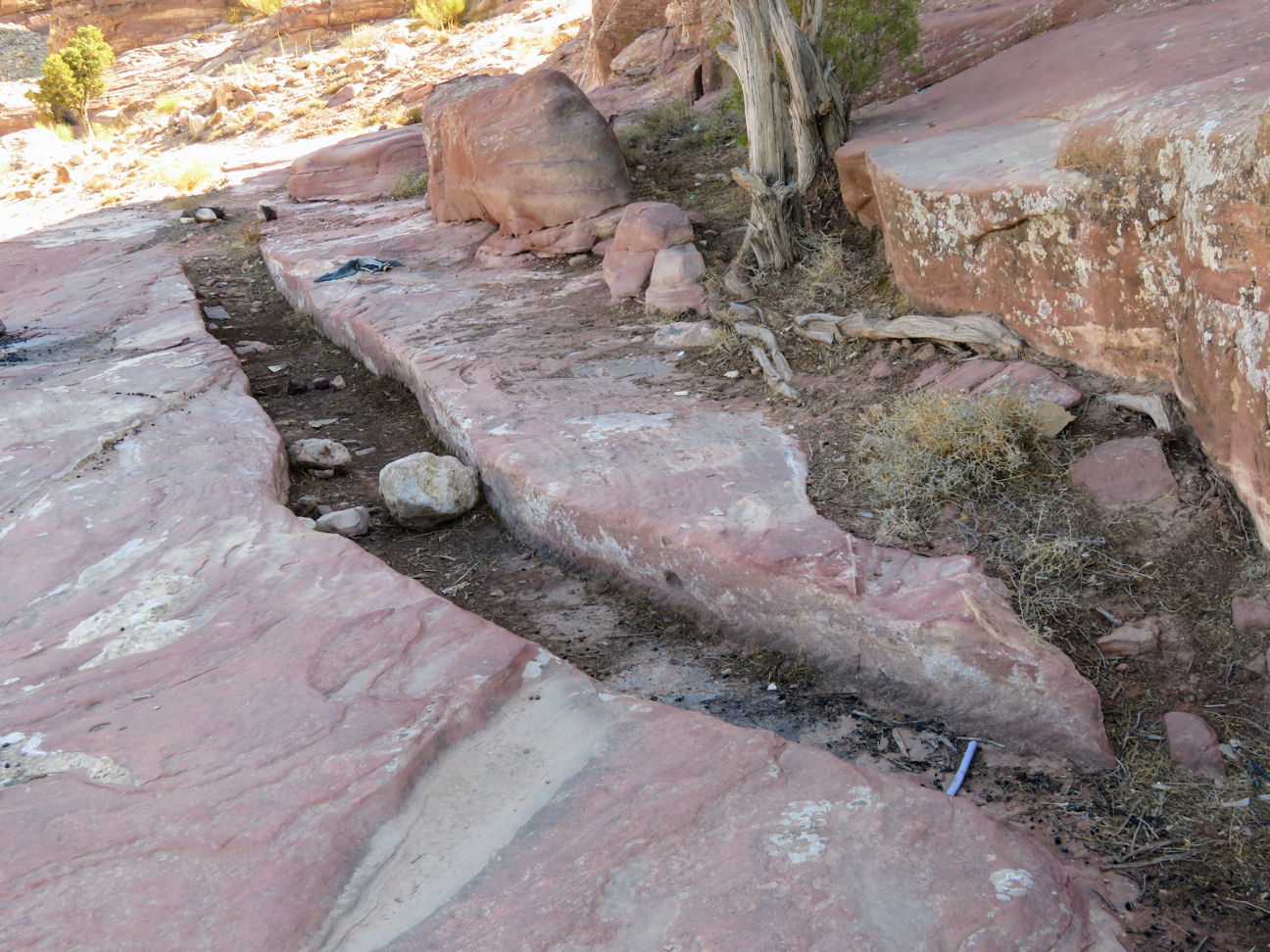
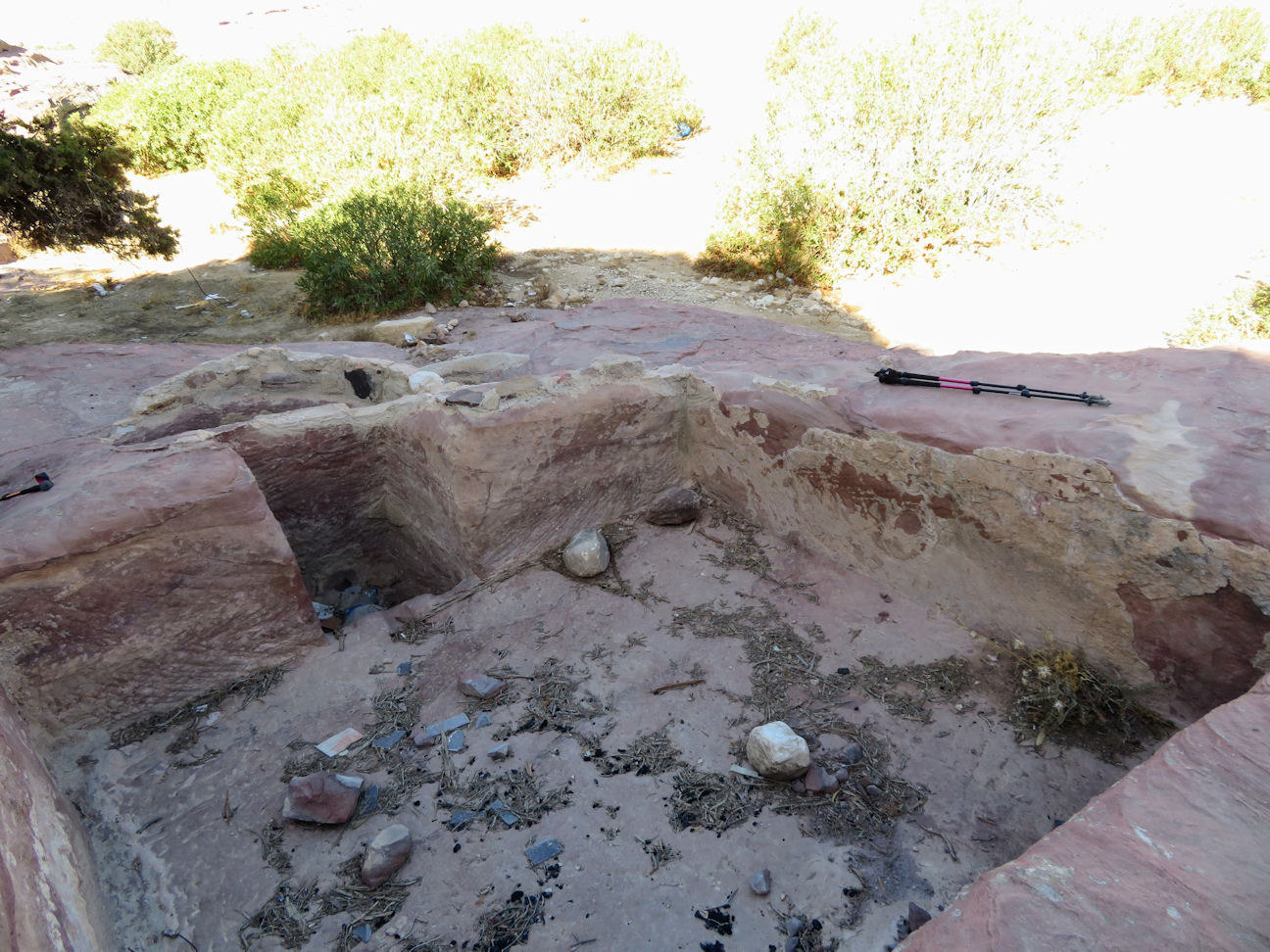
We started to see Nabataean ruins. We visited the ruins of a Nabataean dam, built at the end of a narrow canyon frequently found in this area.
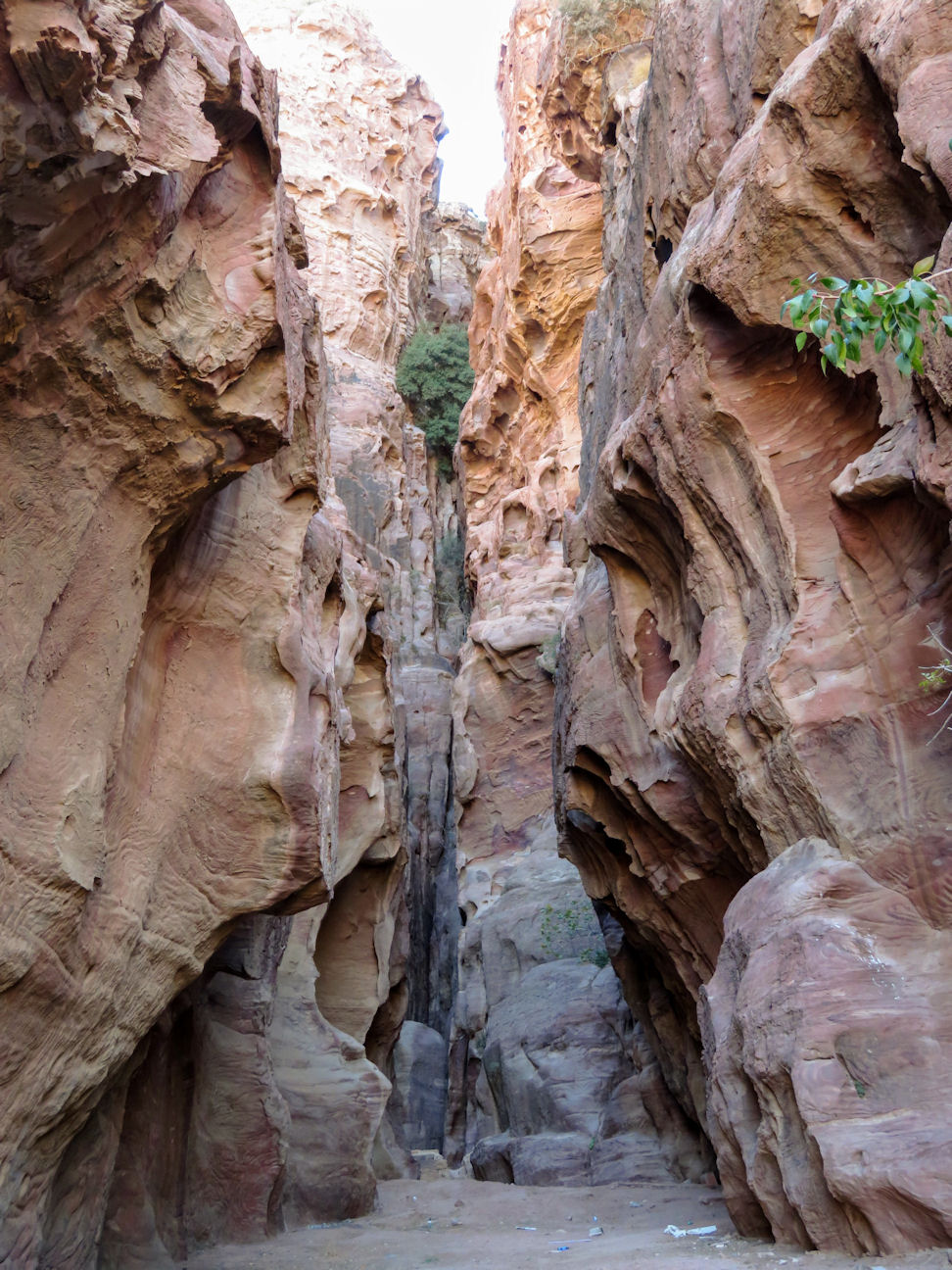
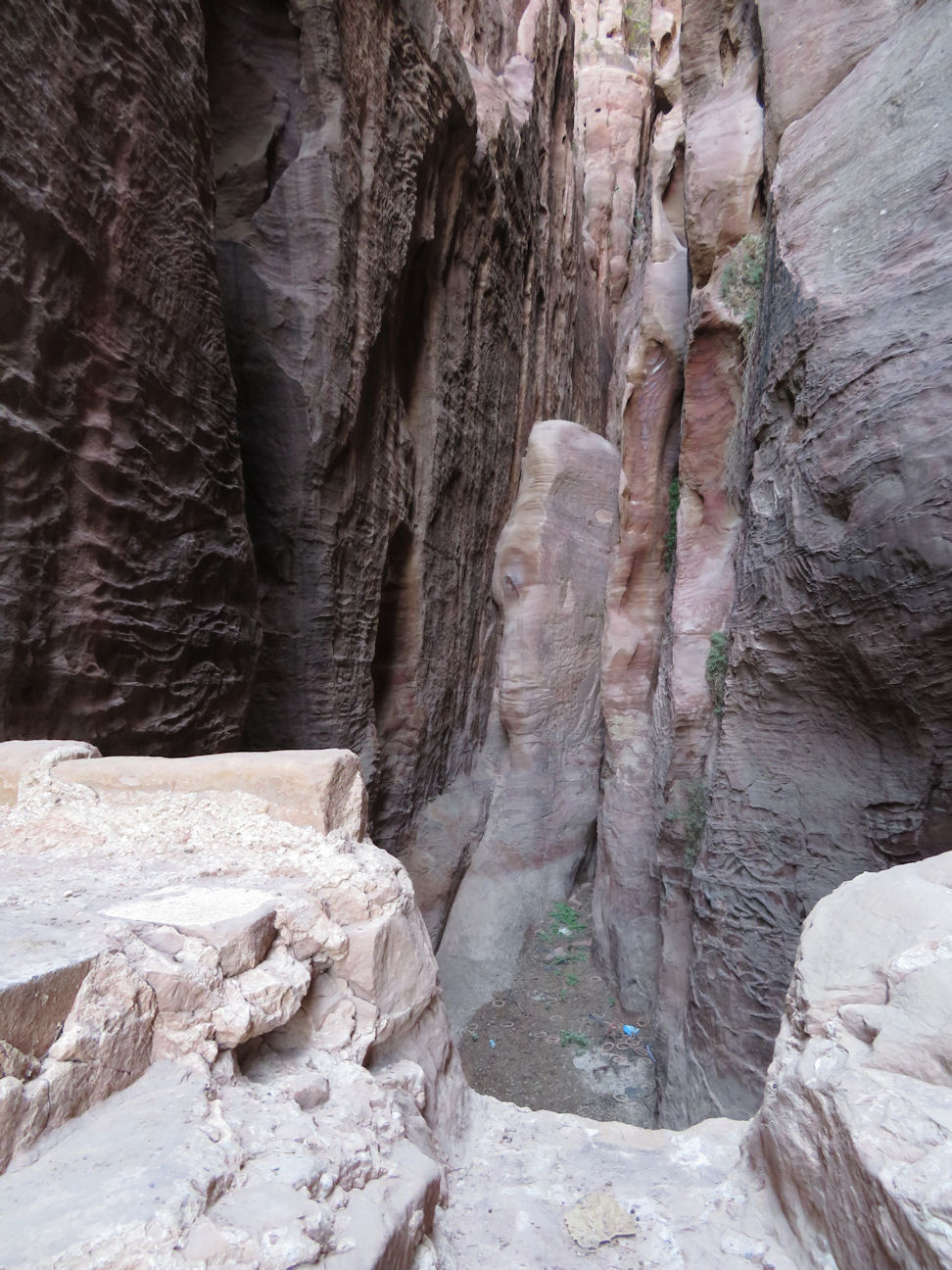
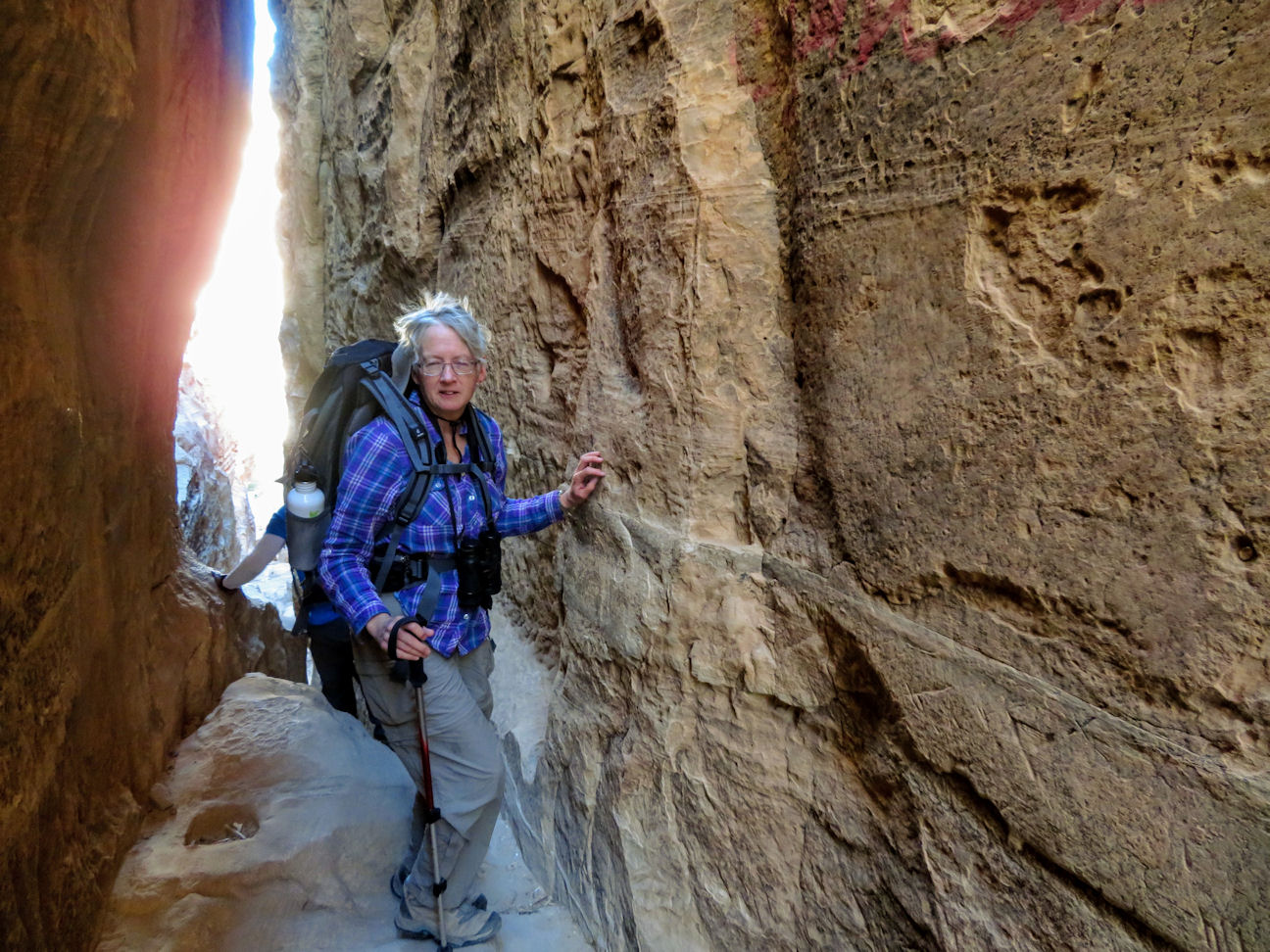
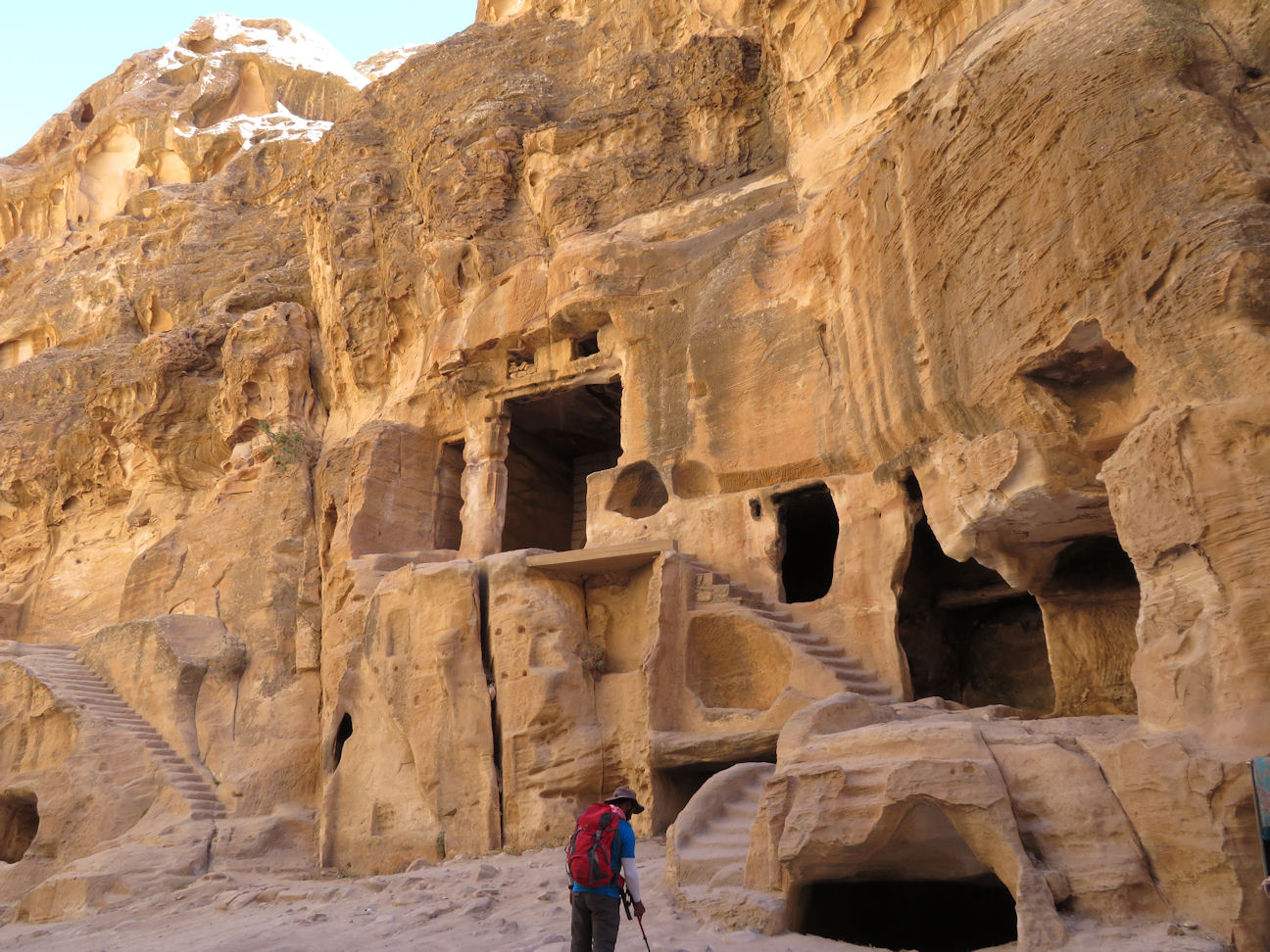
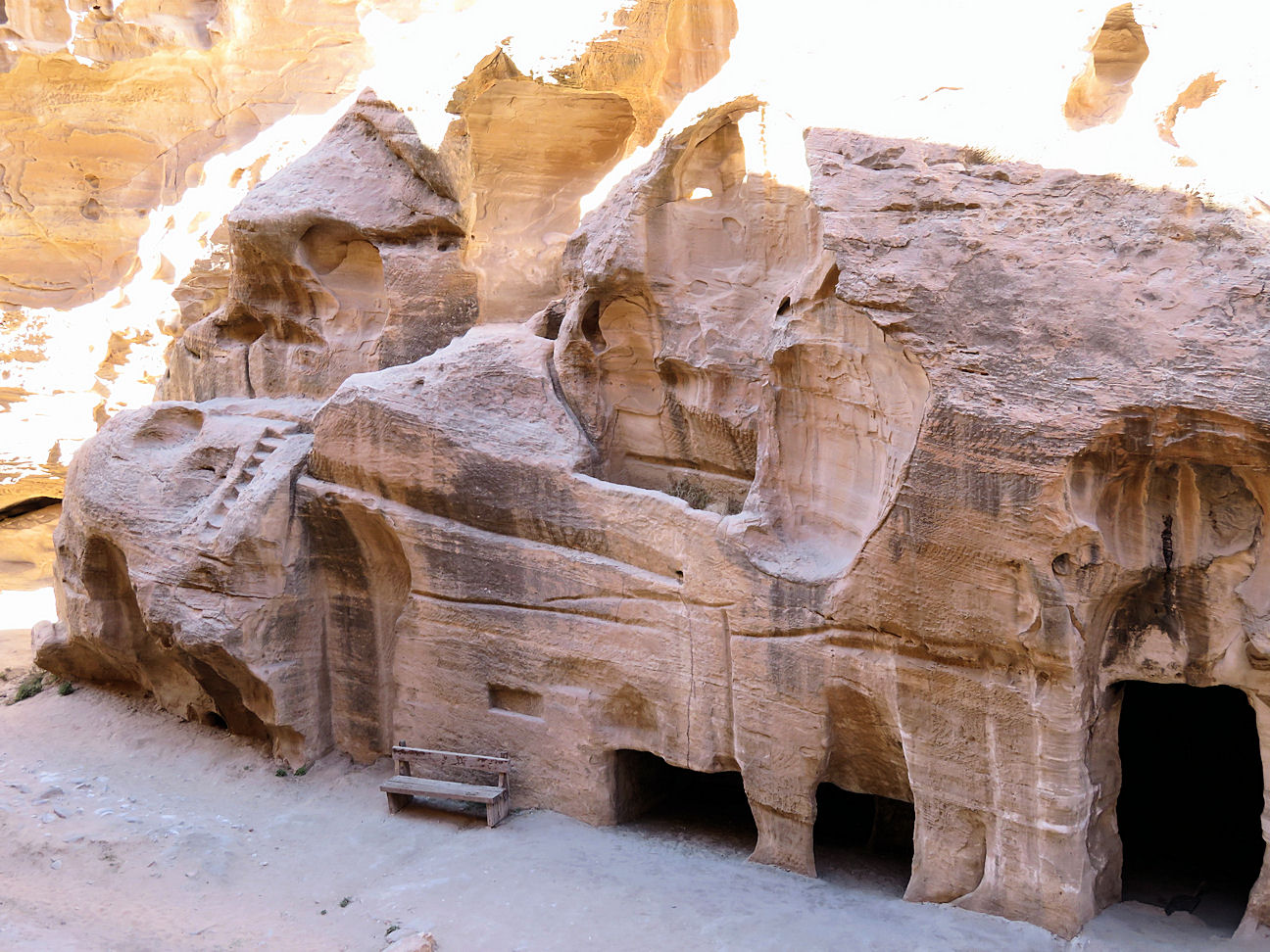
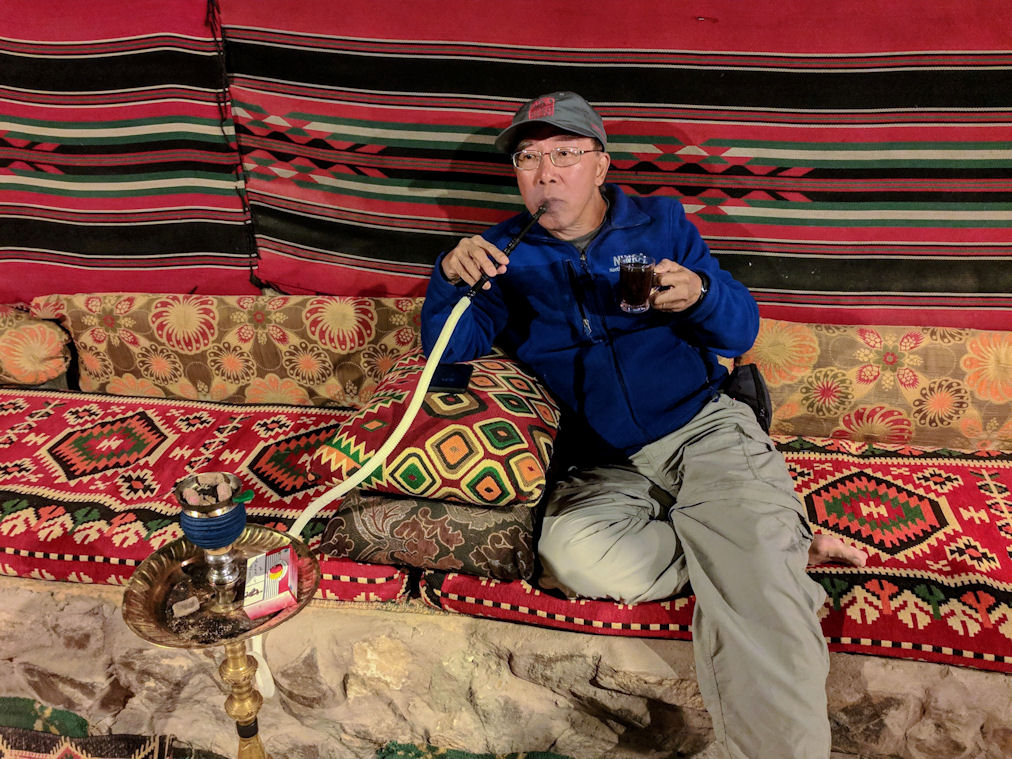
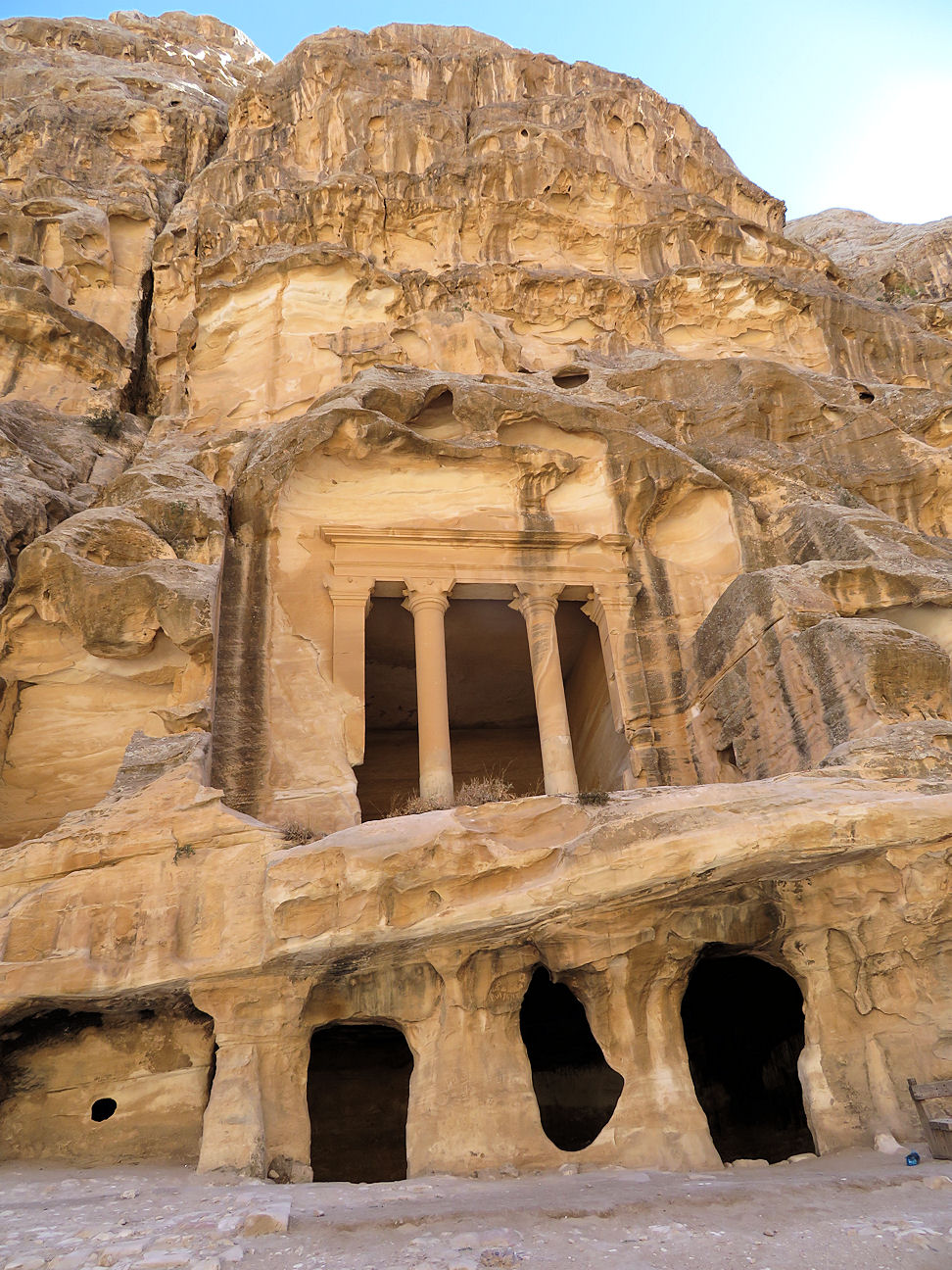
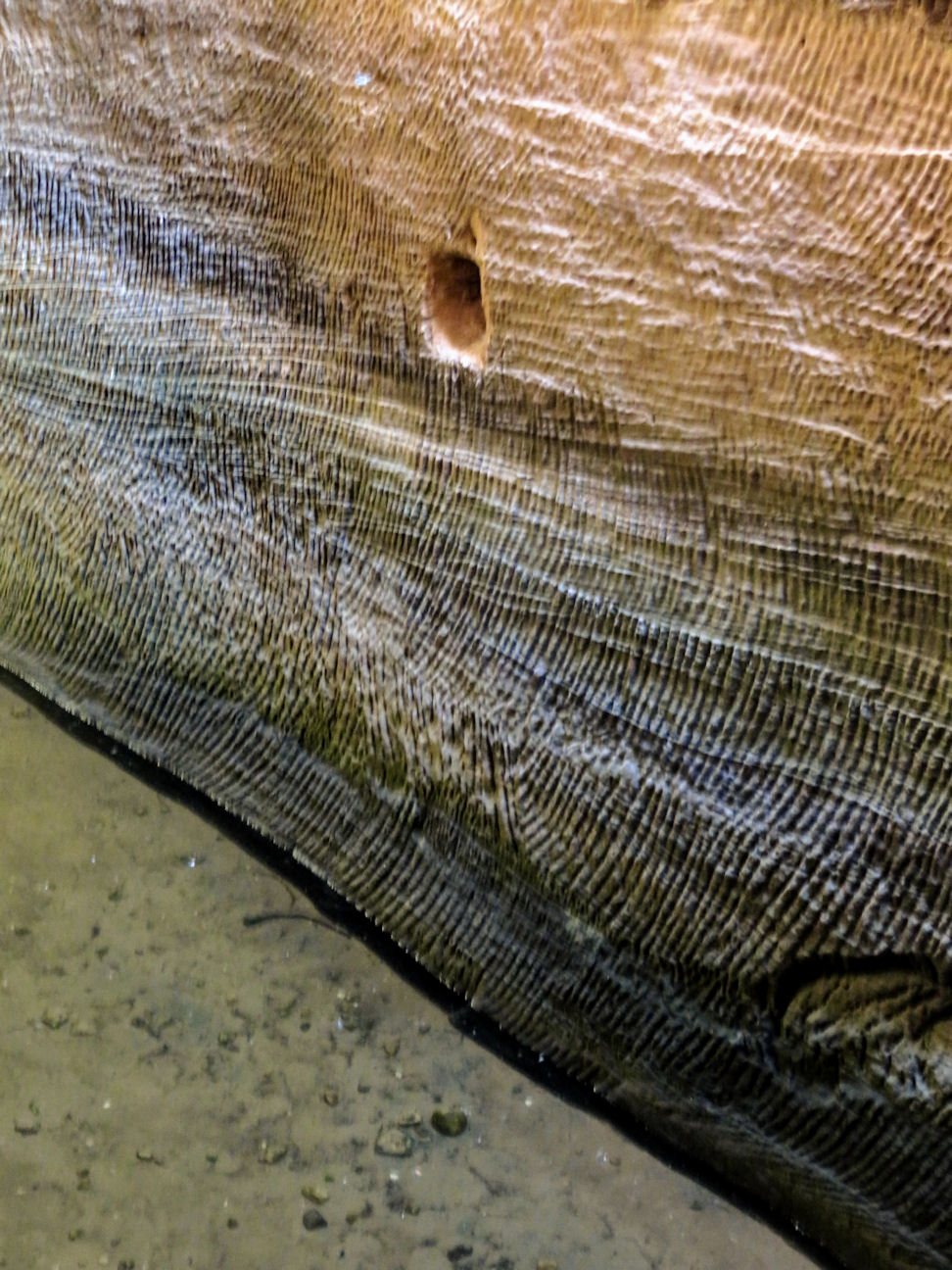
Finally we arrived at Little Petra. Just like the famous Petra, you enter Little Petra via a narrow canyon. But this one is much narrower. Ayman has a friend that sells trinkets at the mouth of the canyon. We stopped by to visit, and of course he served us the sweet tea. David even tried hookah. We have been "forewarned" that a lot of the Bedouins living in the Petra area look like Johnny Depp in the Pirates of the Caribbean movie - dark skin, long pony tails and wearing kohl (dark eyeliner). Sure enough his friend looked like that. The Nabataeans were one among several nomadic tribes which roamed the Arabian Desert, moving with their herds to wherever they could find pasture and water. They flourished from the 4th century BC to the 1st century AD, with their loosely controlled trading network which centered on strings of oases that they controlled and on the routes that linked them. Petra was its capital as a cosmopolitan marketplace. Nabataea was conquered and annexed into the Roman Empire in the 2nd century AD and its prominence started to diminish. The canyon widens up after 400 meters. In the open area, openings have been carved into the sandstone walls. While the purpose of some of the buildings is not clear, archaeologists believe that the whole complex was a suburb of Petra, the Nabatean capital, meant to house visiting traders on the Silk Road. A lot of the openings/chambers have long U-shaped stone benches (carved from the rocks, of course) called triclinium on which people would sit (or recline) and feast. This kind of seating is still common in public areas in hotels (like in the Seven Wonders Bedouin Camp).
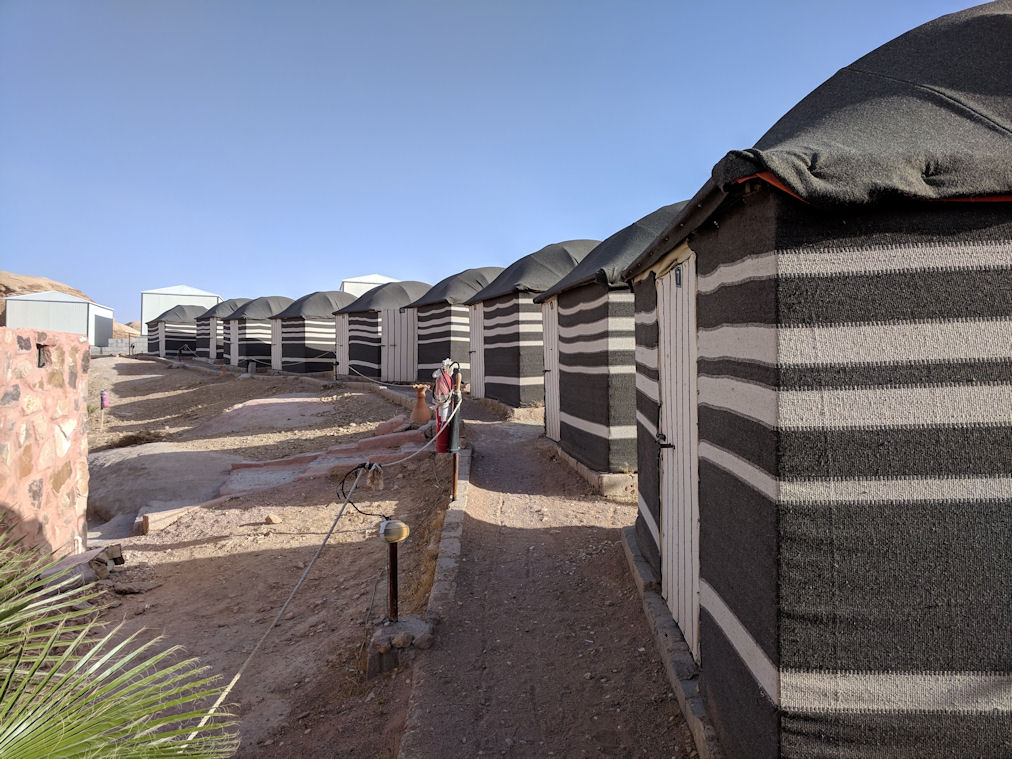
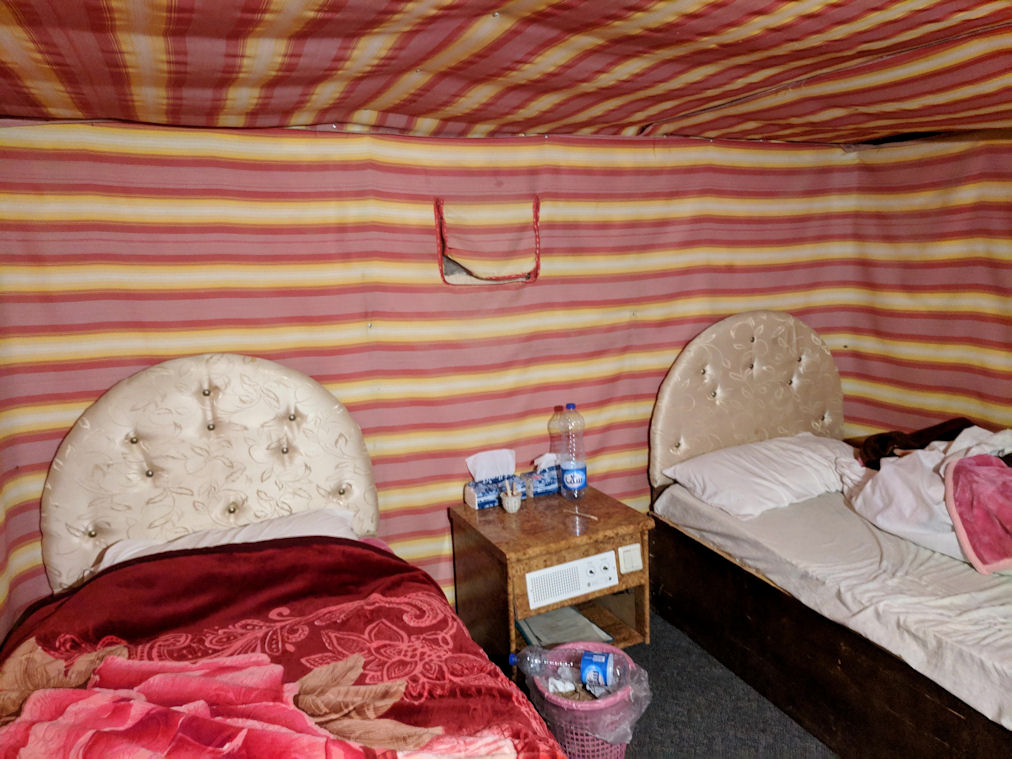
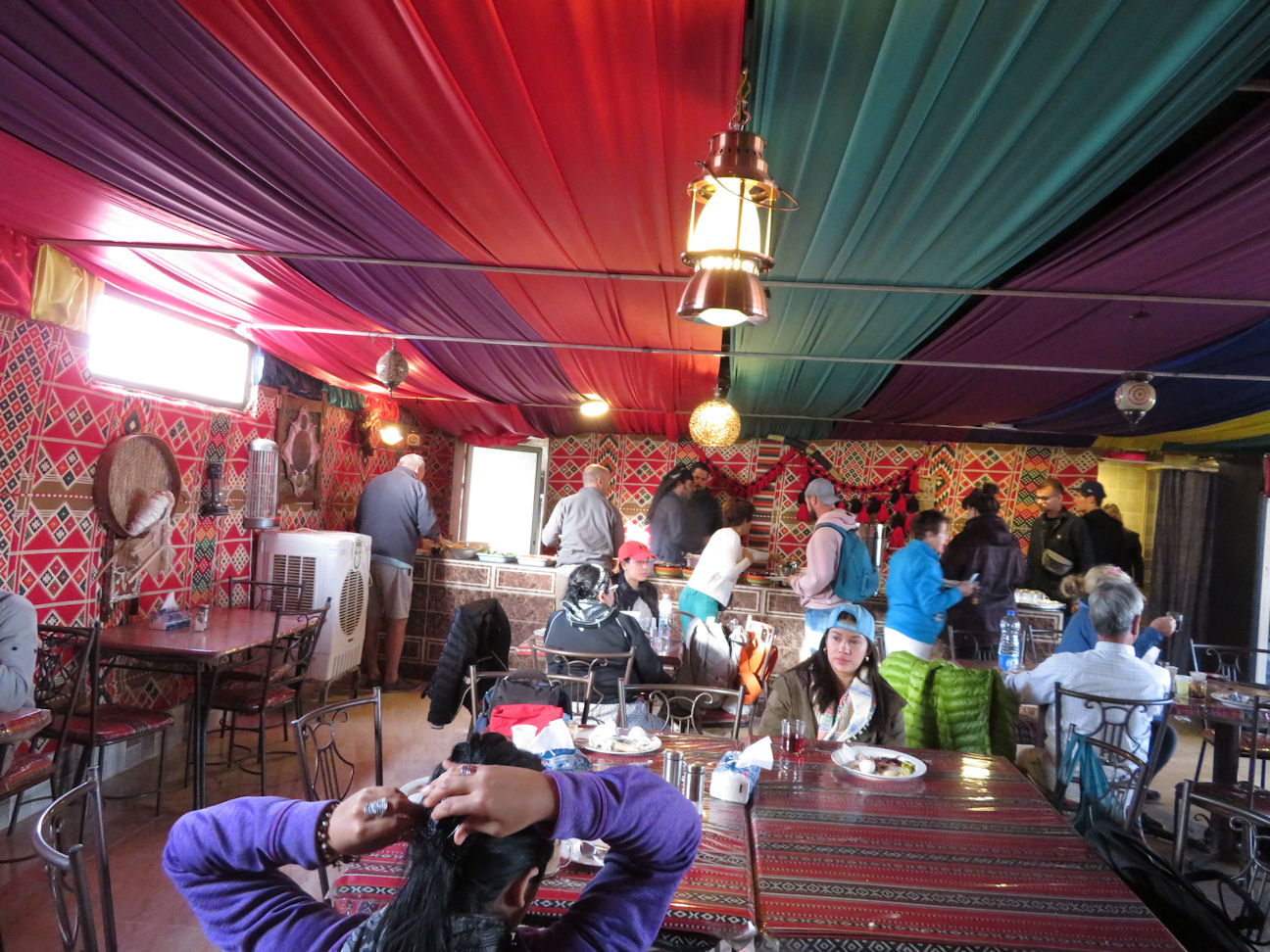
Finally we arrived at the Seven Wonders Bedouin Camp. It was built specifically for tourists, most of which come by car and tour buses. Guests stay in small cubical tents made of tightly woven goat-hair. There were no windows but they are very cozy especially with huge fleece blankets. All the luggage- carrying, hut-cleaning and food-serving was done by Bedouin men. No local women were visible at all.
|