Eastern Turkiye Part 1: Trabzon to Mount Ararat (See Map)After flying back to Istanbul, we stayed there for a day before flying to Trabzon to join the second leg of our tour. This Eastern Turkiye tour was organized by Alkan Travel based in Van. This tour company was recommended by the Lonely Planet tour book. However, the financial arrangement with Alkan Travel appeared to be sketchy. It turned out that its practice is common in Turkiye. Our co-parents-in-law went through the same experiences dealing with another Turkish tour comapny. Read on! Alkan Travel would not accept credit card payments. Our payment options were either by bank wire or pay in cash after we start the tour. We can't image carrying several thousands of US dollars all the way to eastern Turkiye. Bank wire is notoriously risky and susceptible to fraud. There is no protection for the senders - once the money is wired, there is no way to get it back. At that time, all we knew about Alkan Travel was the recommendation from Lonely Planet, its website and a few email exchanges. We seriously debated whether to go or not. Finally we decided to take a risk. We came up with a scheme to make the transaction a bit less risky. We wired $10 to the designated bank and asked Alkan Travel to confirm its receipt and the amount. Alkan Travel passed the test. So we wired the entire amount 3 weeks before we left the US. Everything went well. Another oddity is the looseness of our arrangements with Alkan Travel. After we confirmed (by email) tour booking, two plane tickets (from Istanbul to Trabzon) that we asked for were sent to us without we paying any tour deposit or money for the plane tickets. The tickets were in the form of 2 screenshots. We were told to show the screenshots to the airline at the airport. We could not find out whether the tickets were actually legit or not. We are not used conducting business based on trust only without confirming documentation. That is the way business is done in Turkiye. Everything went well and we recommend Alkan Travel for its eastern Turkiye tours. TrabzonTrabzon is a city on the Black Sea coast of northeastern Turkiye. It was founded in the 7th century BCE.


 (R) Youth chorus in front of statue of Ataturk


 (R) Story of the travelling shoe: On the first (western) Turkey tour, our guide asked us if we are willing to return a shoe, inadvertently left behind on a previous tour, to its rightful owner in Seattle. We carried the shoe safely in a plastic bag in our luggage. Throughout the eastern Turkey tour, we took it out for photographs at notable stops and emailed them to the rightful owner, who found this quite entertaining. He and his wife thanked us with a wonderful dinner after we returned, with shoe, to the US.

 (R) Christian fresco on ceiling of Hagia Sophia (Trabzon)
Sumela MonasteryFrom Trabzon we drove to the Sumela Monastery which is a museum and former Greek Orthodox monastery in the Pontic Mountains, in the Macka district of Trabzon Province. We doubled back to the coast and drove westward to within 10 miles of the Georgian border before headed to inland to the mountains on our way to Erzurum. 
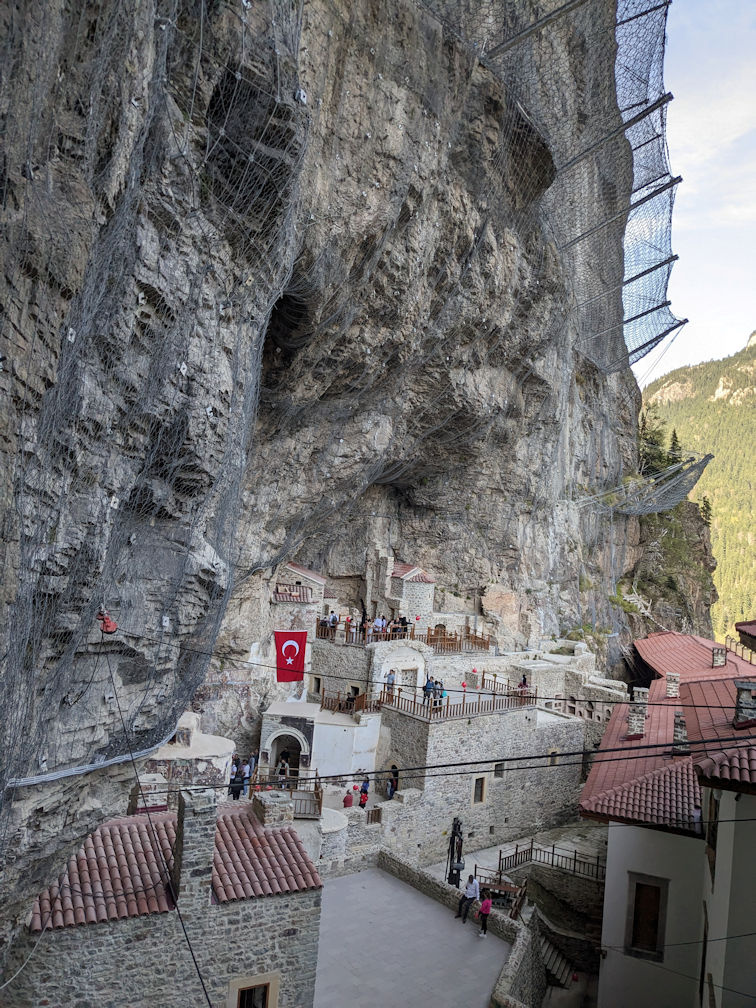
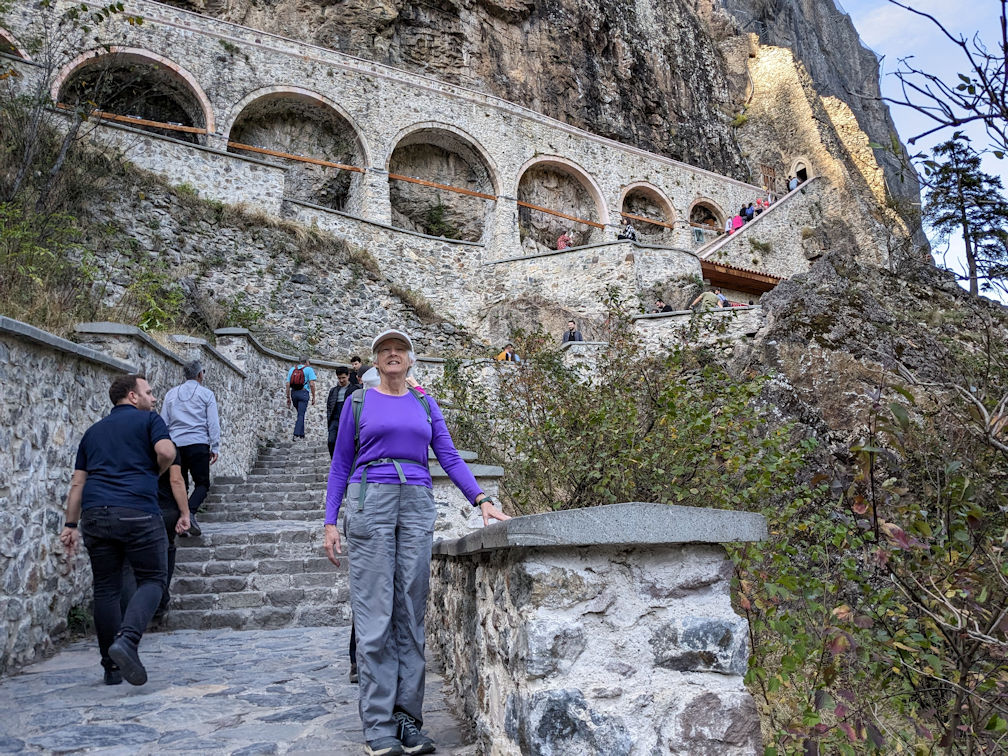


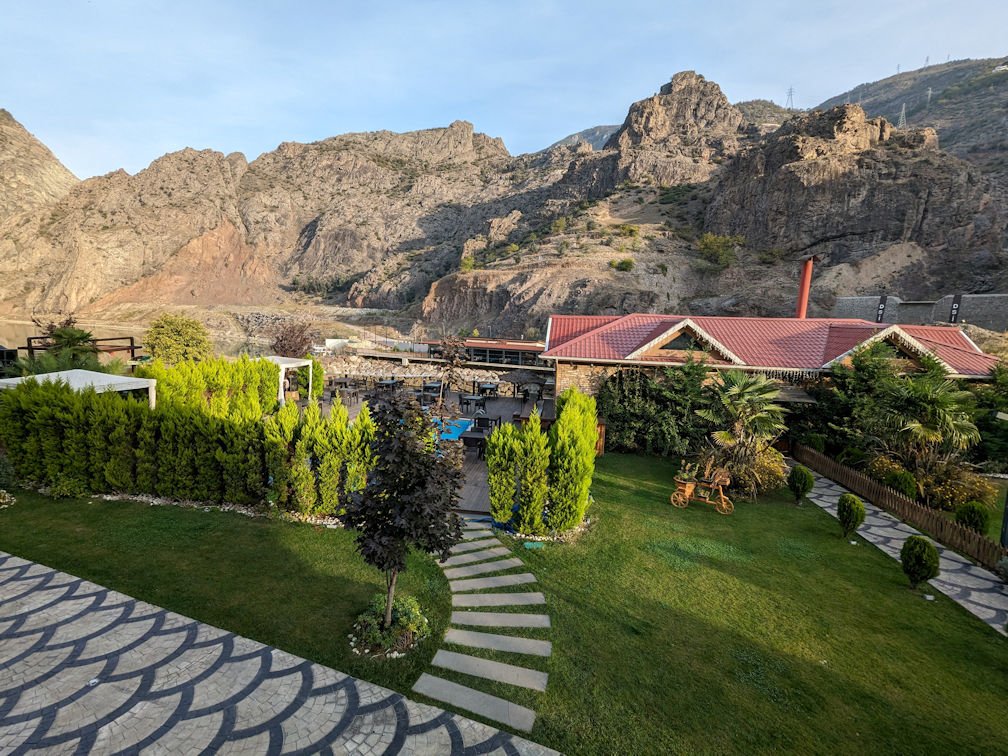


ErzurumErzurum is a major city in eastern Turkiye. It served as the capital/important centers throughout history from 3rd century BCE.


 (R) Huge cabbages in Erzurum market

 (R) War Memorial off the highway. This area had changed hands many times throughout history.
Ani ruins near KarsThe medieval ruins of Ani (near Kars) is at the present-day closed Turkiye-Armenia border. Ani was part of the Armenian Kingdom in the 9th century and is known as the city of 1001 churches. It was the starting point of one of the Silk Roads.


 (R) Church of the Holy Apostles


On the way to Van: Salt caves, Ishak Palace and Mount Ararat


 (R) Noah's Ark National Park - The Durupinar site is a geological formation made of limonite on Mount Tendurek, 10 miles southeast of Dogubayazıt and 18 mi south of the Greater Mount Ararat summit. The size and shape of the formation led to its promotion by some believers as the petrified ruins of the original Noah's Ark. We actually saw Christian pilgrims singing, chanting and blowing horns at the site.
|