|
Sokcho and Seoraksan National ParkWe left hotel around 10:30 in the morning after packing up in orderly fashion – what could go in suitcases that would go under bus and possibly lost; what to put in backpacks for access during 3-hour trip. I was still suffering from once-a-day diarrhea and eating very little and drinking Gatorade, one cup of espresso to start the day. David was eating the pastries I couldn’t eat. It was many stops on the orange line to Express Bus Station south of Han River. Toward the end of the ride I felt need to go to bathroom, so as soon as we exited we found restrooms. I was fine once relieved and as always pleased with the cleanliness and the fact that these had mostly western style “throne” toilets. Finding the express bus terminal from the subway station took some doing – the signs seemed to lead us forever onward underground without reaching any bus terminal. Finally we asked a woman, who did not speak English but pointed the way. The signage was for “Express Bus Boarding Gates” and David worried that we were missing a separate ticketing area, but that was not the case. The ride was comfortable and efficient. It was great to be up high in a bus as the driver expertly drove through some busy parts of Seoul. Traffic was orderly as it was not commuting time. The route was on freeway for about half the trip, then on highway. At a halfway point there was a stop at a rest area with food. As we headed east, we could see the beginnings of agriculture – greenhouses and small plots of crops still within the outskirts of Seoul. Also some mixed industry, and we were along the Han River for first part. It did not take long for the landscape to become hilly, then mountainous, with rivers cutting between steep rounded peaks, with mostly deciduous trees totally covering them. In some areas the vegetation changed abruptly and completely to coniferous in wide swaths – apparently replanting of commercial forest. David noted the steep open slopes along the highway frequently had metal ladders running up all the way to the tree line – what for? We arrived at Sokcho on the Sea of Japan (or East Korea Sea). It is a much bigger city than the commercial fishing port we had imagined from the description in Lonely Planet. But we made our way from the Intercity Bus Terminal to the local bus stop for lines 7 and 7-1 with a little help from the information booth just outside the IBT. The local bus got us to Seoraksan National Park in about a half hour. It dropped us off, then we still had to roll our luggage ¼ mile or more through park entrance, eating areas, etc to eventually find the Seoraksan Tourist Hotel near the end of the commercial area and just before a Buddhist temple, with 18 foot high bronze Buddha with lacework halo behind his head. As promised in Lonely Planet, Charlie Kwang, the manager/front desk person is friendly and always offering help. We got settled in Room 312 at the end of the hallway. Our little balcony give us a view of craggy, misty forested mountains just like on a Chinese scroll painting, framed by a gingko, fir and hemlock. The room is plenty big with two beds, a little closet, heated floor, single shelf 5 ft wide with mirror and TV. 
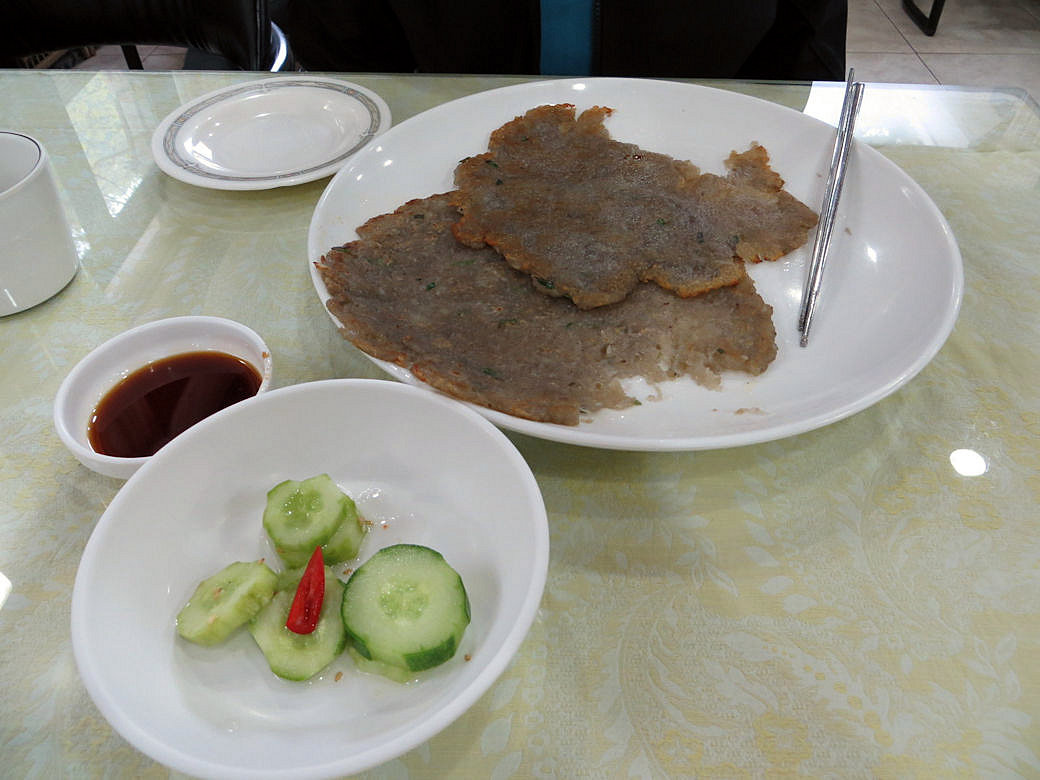
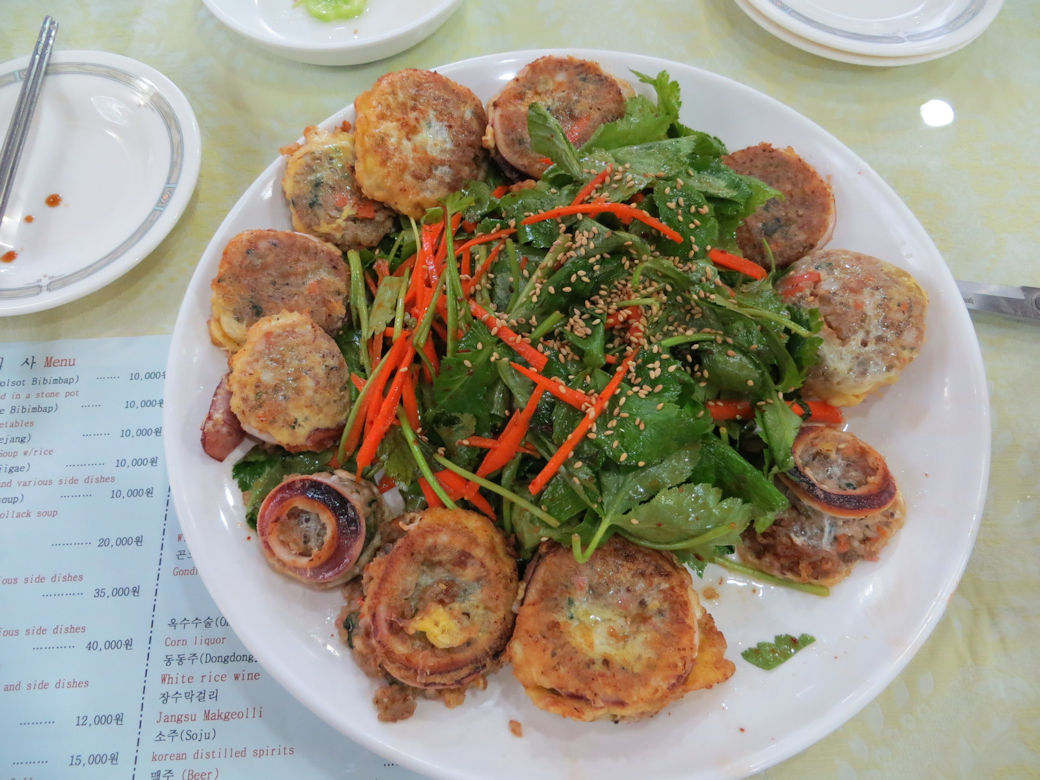
(L) Relaxing on hotel balcony (R) MeditatingDinner at Seoraksan restaurant was a large potato pancake (gray and gluey, and flavor bland but ok) for me, and for David the squid sundae, which is squid rings stuffed with a mixture of bits of squid, seasonings like sausage, maybe some vegetables. I tried one of his squid pieces and it was delicious. The rings surrounded a pile of greens in the center, nicely arrayed.
(L) Potato pancake (R) Squid ringAt first we were the only ones in restaurant. Gradually a few other westerners came in groups of two to four, including a mom, dad and son in his 20s who seemed to be speaking French. Then a group of 30 or more arrived – little middle aged men and women, likely from Seoul all in a tour group, wearing blue or orange lively windbreakers, all the women a bit round with similarly tightly curled black hair and the men looking worn and aged as if from years of hard work. They were a cheerful, happily-noisy bunch and were seated at the tables with BBQs. The waiter brought a few beers for the men. The next morning we went to the hotel “coffee shop and snack bar” for western breakfasts. Lovely setting, tablecloths and classical music – a cello sonata was playing. Once again we were the first because we’ve been waking earlier each day. I went to the restaurant soon after 7 am to see if it was open, because we were already ready to eat. For me a tiny espresso and a dish of homemade yogurt with blueberries, 3 frozen strawberries, a nut-like thing that seemed to be toasted, dried red dates dusted with sugar, and honey. It was a thing of beauty to look at and tasted great besides. David equally enjoyed a plate of waffles with blueberries, 2 or 3 frozen strawberries, a dollop of whipped cream and a cappuccino with the musical clef spiraling through the coffee. Our first hike was to Ulsanbawi (dramatic rocks), 3.6 km from the village/tourist hotel. It was cool and sunny as we hiked on the trail along the stream. We were nicely shaded – there were oaks, maple, Carpinus, Starex, Pinus densiflora, maybe some beech and cherry. The National Park had done a nice job of putting signs on about 10 species of trees, using little plaques with Korean characters for common name and then the Latin name.
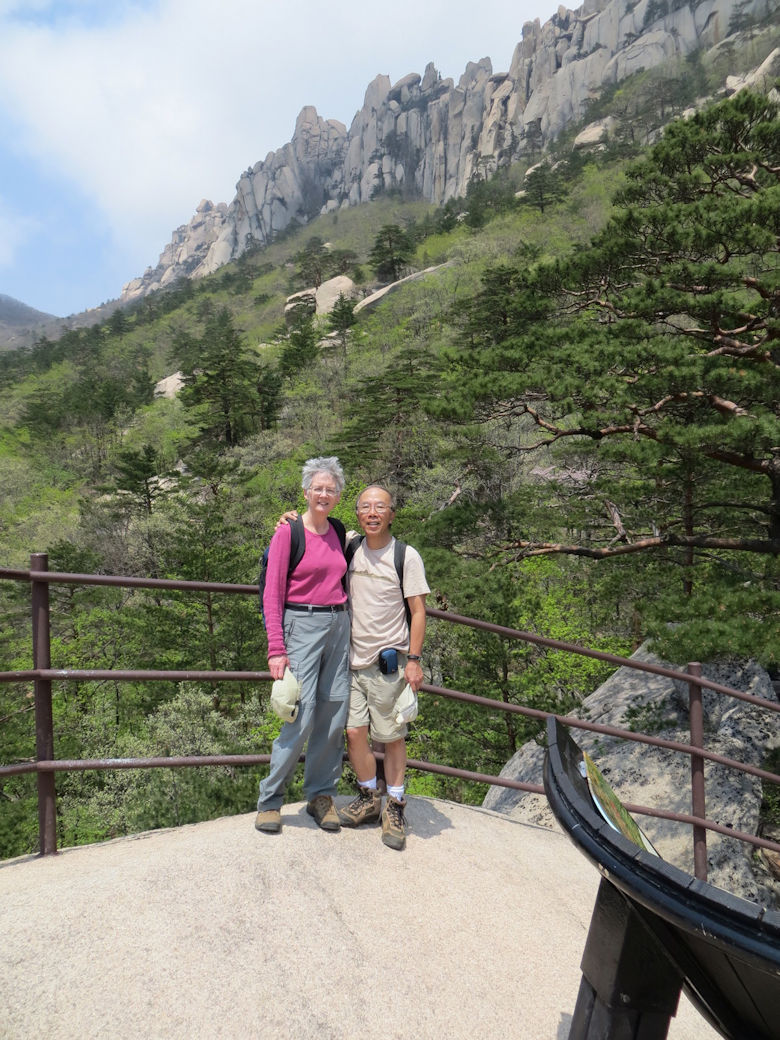
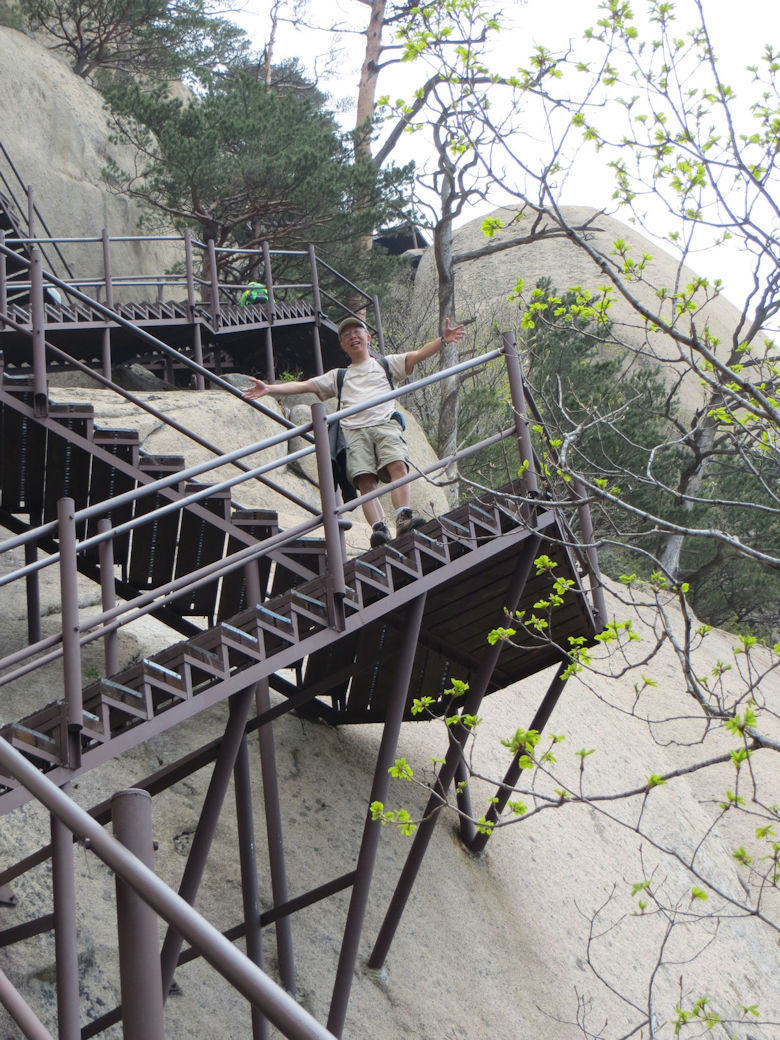
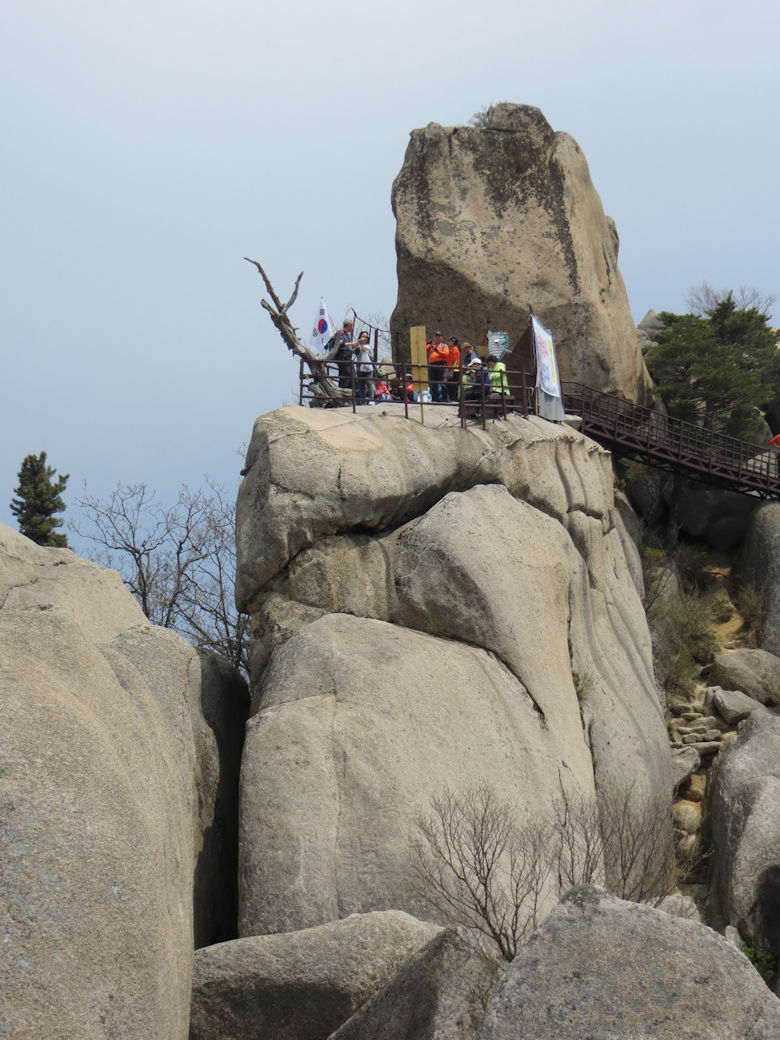
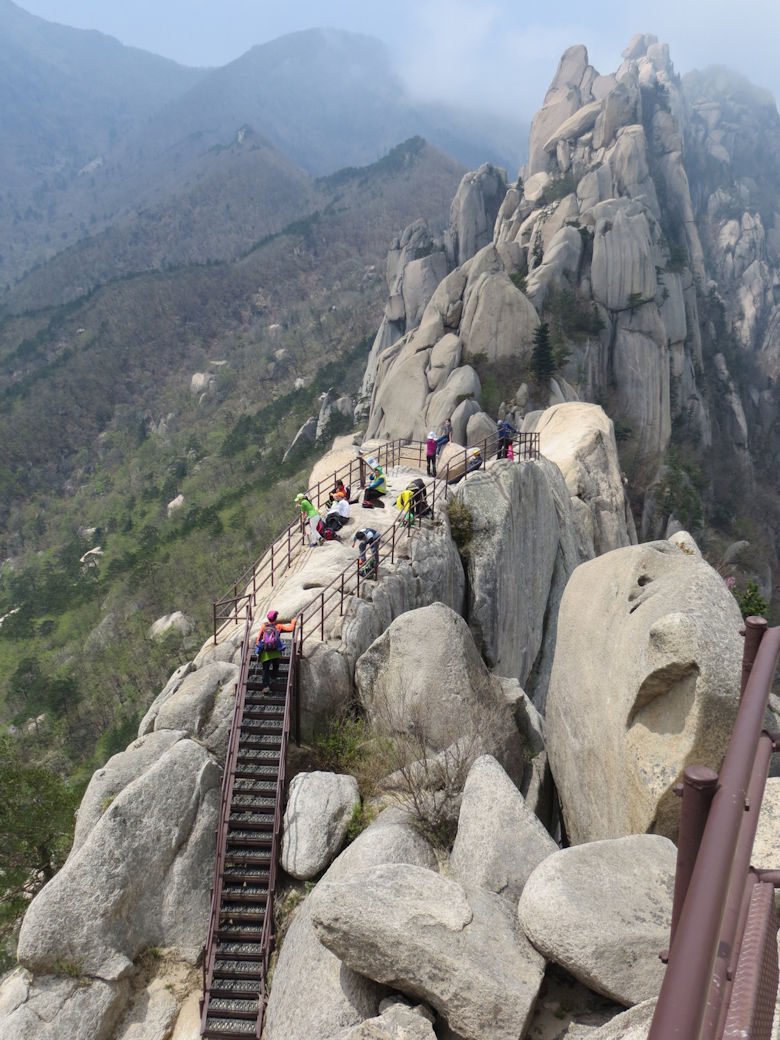
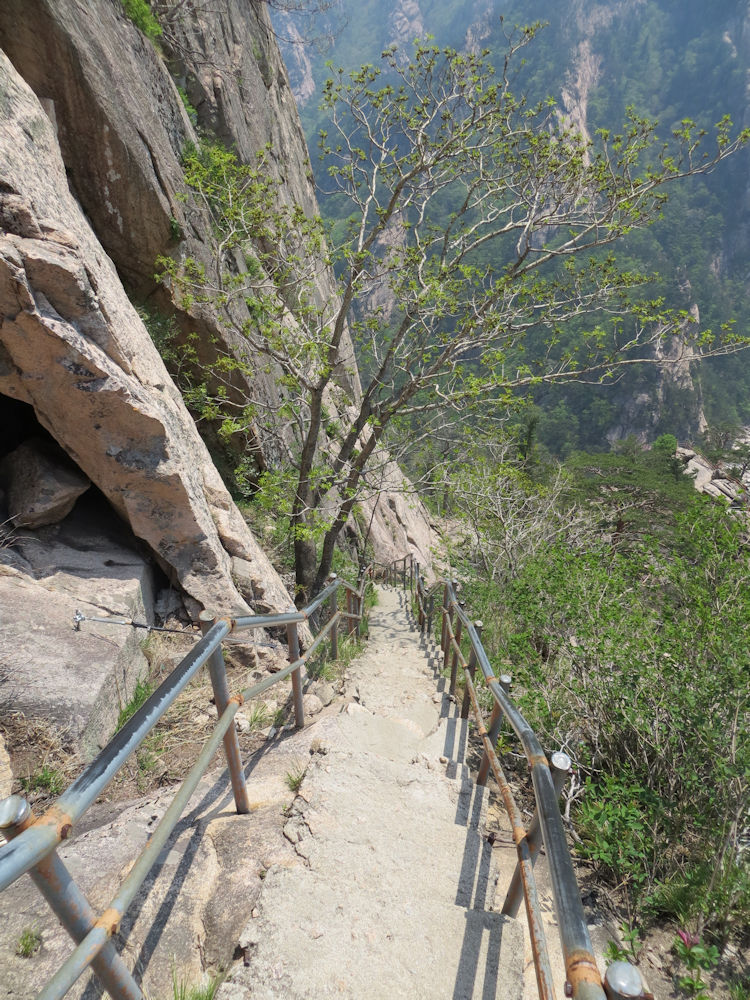
We have to hike all the way up thereAs we got past two km the trail gained in elevation, got steeper and surface was stony. We reached a viewpoint that we thought was the end of the trail. But a photo display showed the trail much higher, with metal stairs and railings embedded in the rock. And the party of 3 we’d seen at dinner the night before – had thought speaking French – were now speaking German and had just come down from the peak. They were sweating heavily. David and I welcomed the chance to keep going and get to the peak. So up we went, up more stone steps and then metal stairs with metal railings. At the top people were taking pictures of one another, and laughing with the accomplishment. A man with jacket emblazoned Emergency Rescue Team was taking photos of groups (using their cameras) and encouraging them with shouts and pumping his fist so that they would pump their fists for the photo. We did this too.
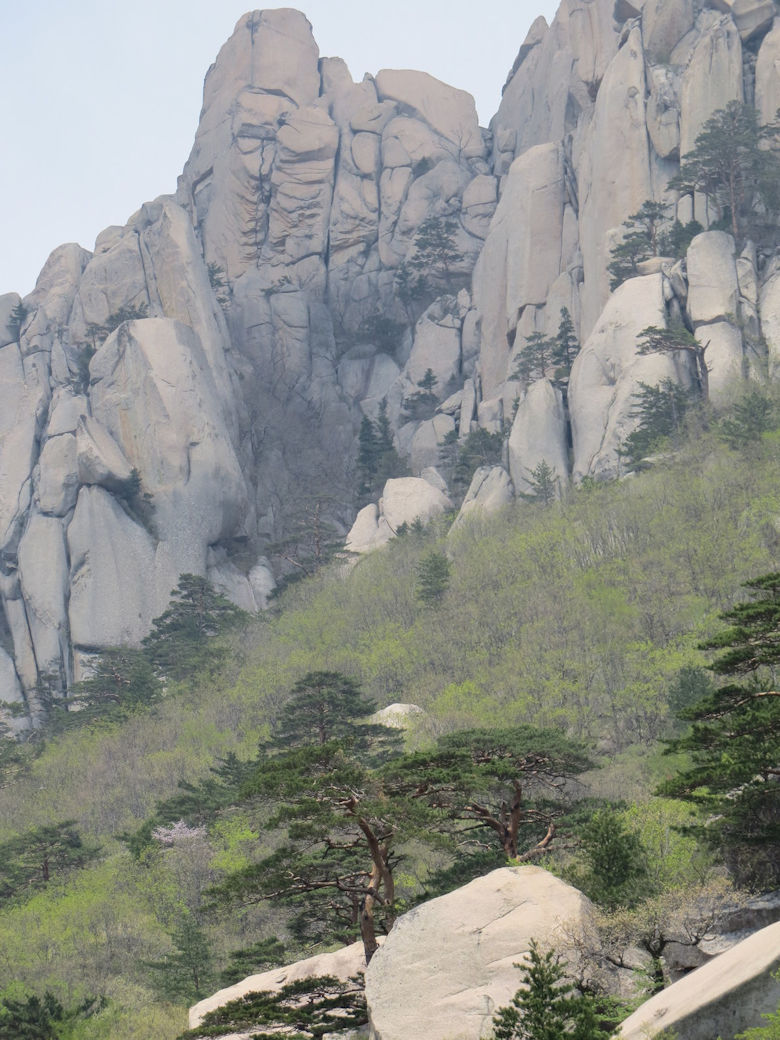
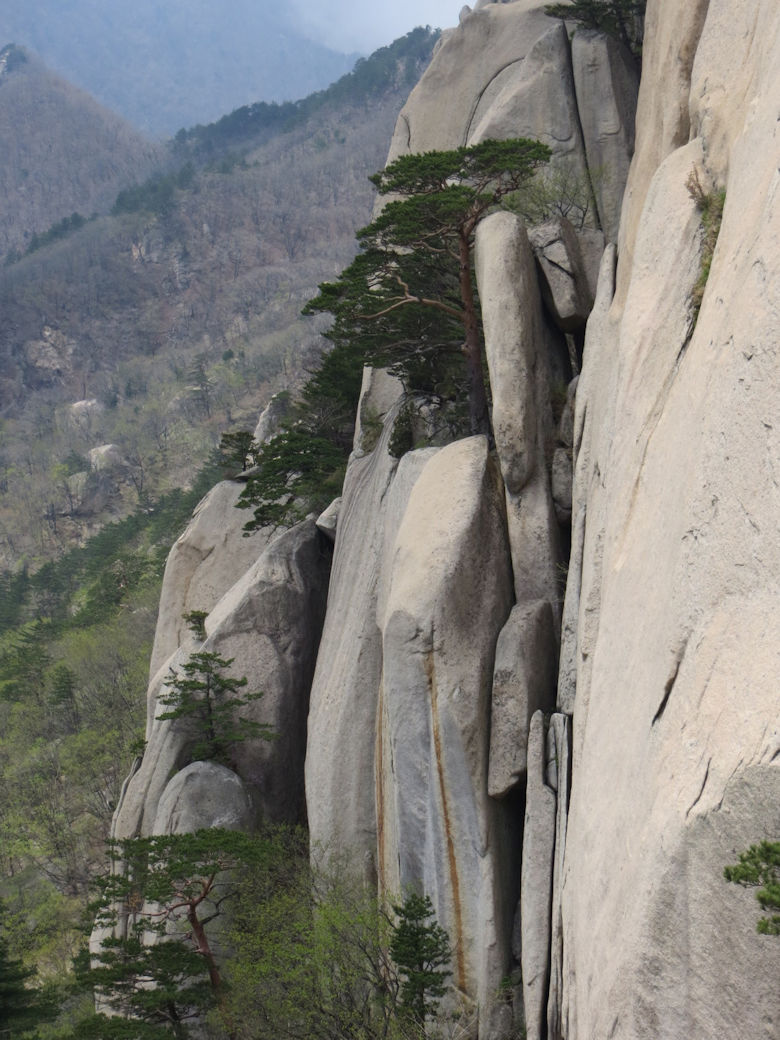
(L) Huge sheer granites (R) Metal stairs built on the face of granite
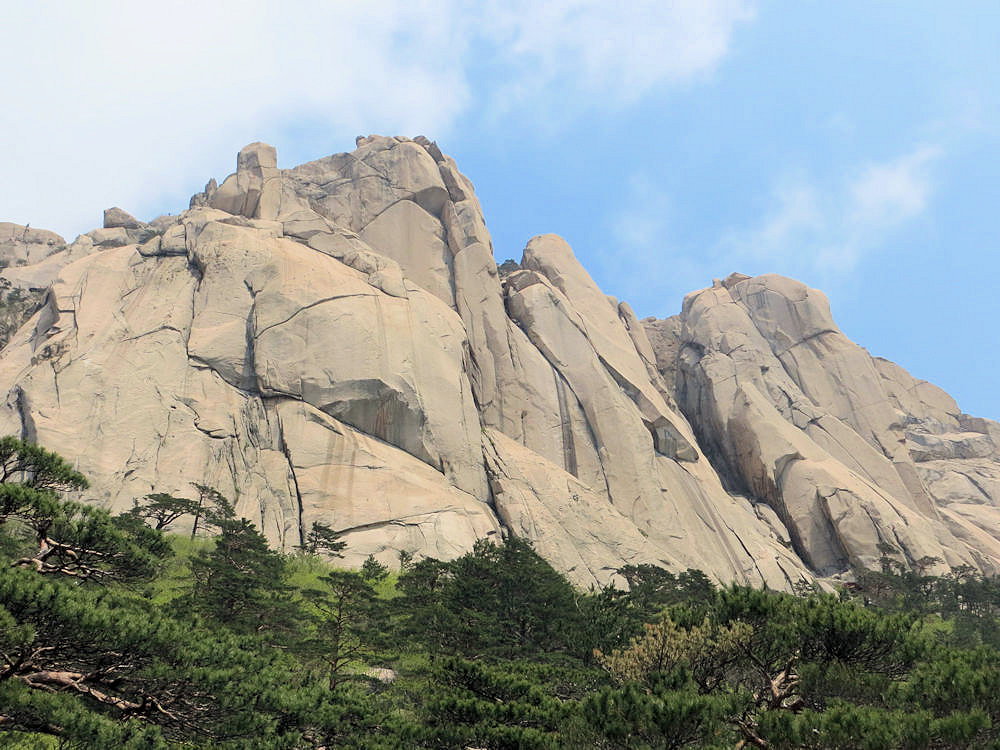
(L) Ulsanbawi (R) At the top of Ulsanbawi
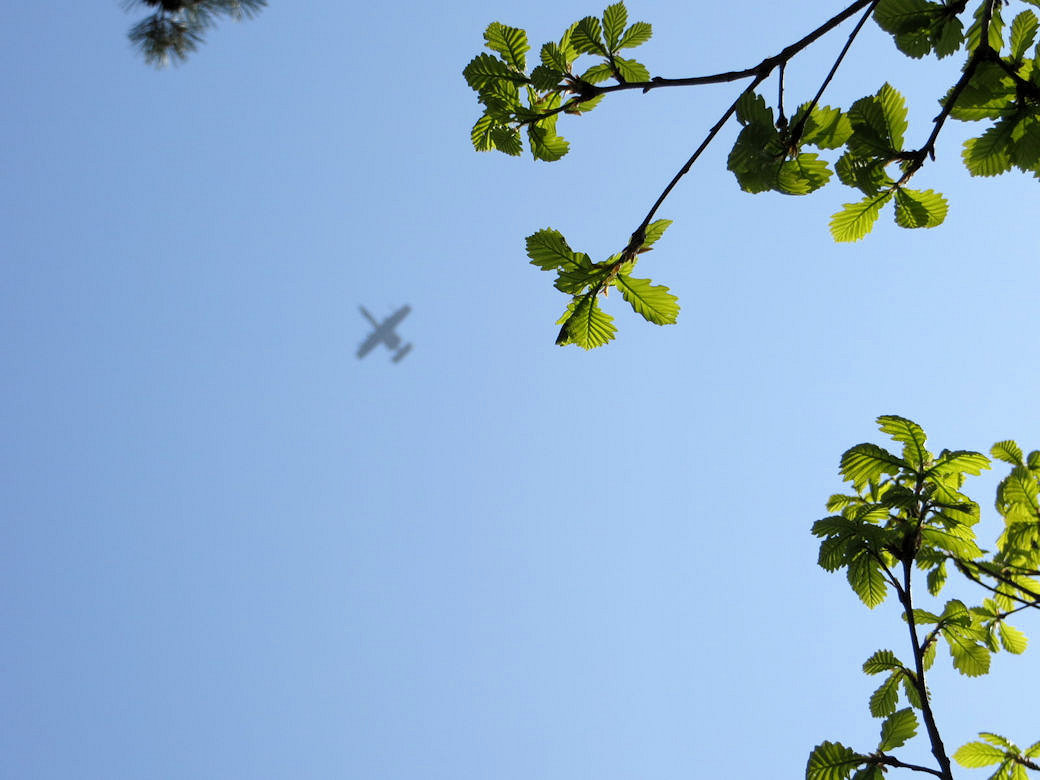
(L) Looking back up to the top of Ulsanbawi (R) Looking down from the top of UlsanbawiThere was another viewpoint to the side where we plunked down and ate our lunch. More photos, more friendly offers by us to take others’ photos and others to take ours. A cheerful spot. These mountains are spectacular – rising narrow slabs of bare pale rock, with crevices with gnarly conifers grow. And in a couple of crevices, the pale pink azaleas so common along the lower trail by the stream. On the way down, around 1:55 pm, two military jets came out of nowhere. They roared from behind one ridge across the sky and over behind the next, turned around and screamed back again. This National Park is very far north, not that far from DMZ, so we assume this is South Korea doing military exercises. The two jets carried out this pattern for a full half hour, then disappeared and it got very quiet. Soon after a single helicopter began buzzing back and forth overhead.
Armed fighter jets flying over Seoraksan National Park; missiles can be seen clearly hanging on the wingsAfter getting back from the hike, we went into Sochko for dinner. It was rather convenient by bus – it runs every half an hour or so until late in the evening (9-10 pm), and it only took about 20 minutes. We had a traditional seafood hot pot. It was the first time we had something called sea squirts, or sea pineapples. They are small (1 inch) sac-like marine invertebrate filter feeders. When you bite into it, it squirts awful tasting stuff out. However, we didn’t try Sokcho’s specialty food – live baby octopus.
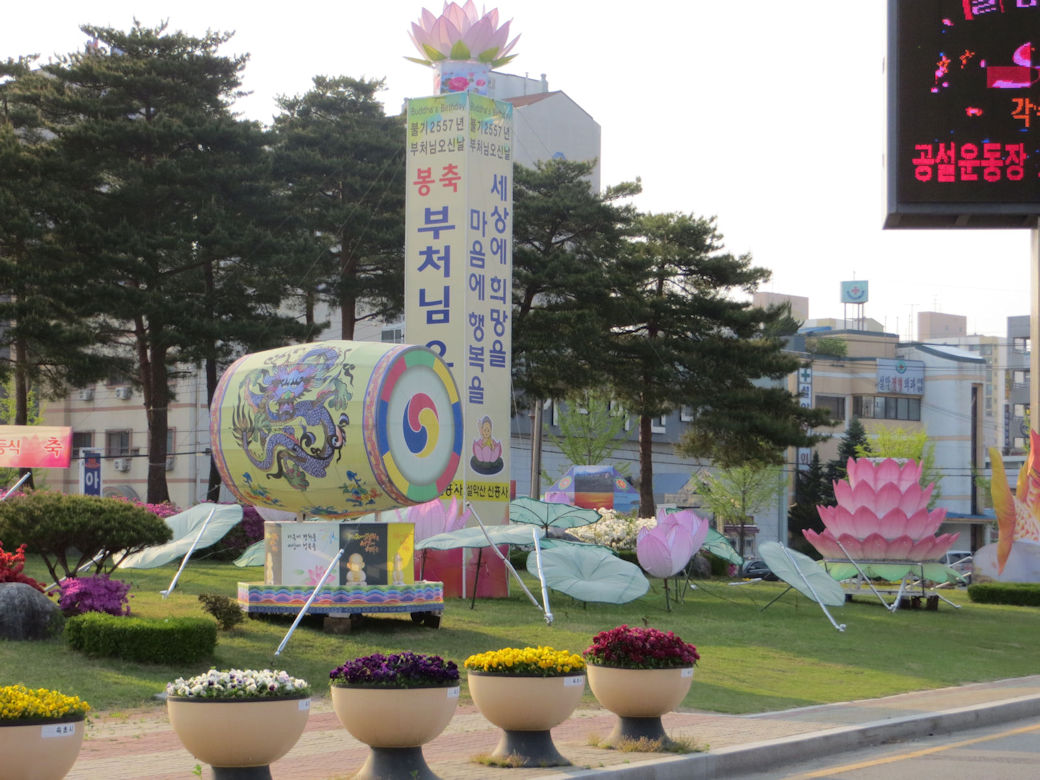
(L) Seafood hot pot (R) Decorations for Buddha Birthday celebration in SokchoThe next morning we had breakfast again at Hotel Snack Bar and Café. I seem to be done with traveler’s diarrhea. Food is wonderful. We both order the waffle and berry set which comes with a nice large Americano. We also order the same sandwich as yesterday – she gives us two sandwiches of different sizes - both with ham, tomato, melted cheese, potato salad and pickle on white toast. The second day of hiking is intended to be the more ambitious day – there is a peak Daecheongbong 11 km away on a trail that heads south from the tourist hotel area. We started south and reached Biseondae. But at the teahouse and river rest spot, and bridge across the river, our way due south toward Daecheongbong is blocked. We switched to going up to a cave.
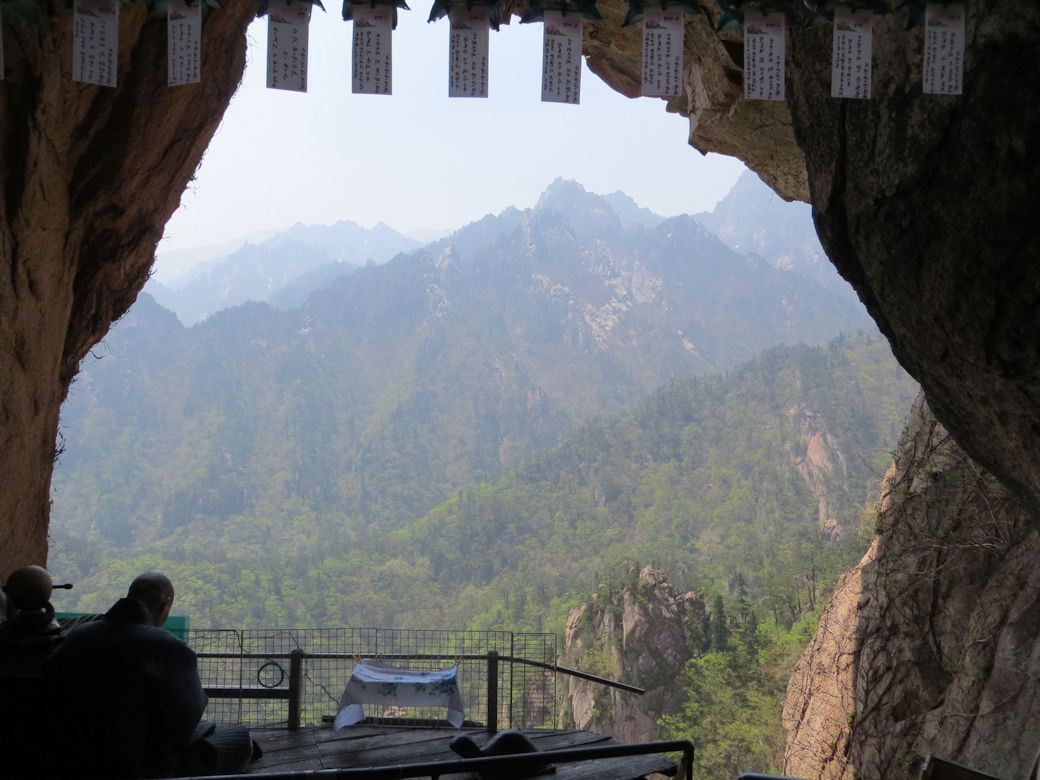
Stairs leading to cave with a Buddhist shrine
(L) Buddhist shrine in cave (R) View from inside of caveDescending the stone steps below the cave, we encountered an old man coming up. He stopped, looked us over, and asked, can you guess how old I am? Turned out he is 81, climbing this trail that we find not overwhelming but very steep and a real challenge. He told us he had been in the 8th Army (U.S.) in the Korean War. We sat eating lunch above the blocked trail - in other words, in the prohibited area. A ranger came along and nicely asked us to come down. We did but asked why. He did not speak English so we sat and worked it out, with some charades (rain = it hasn’t rained in two months – very dry) and some use of the Korean translation App on David’s cell phone. The trails are forbidden because there is wildfire danger. David thinks the helicopters are doing surveys. A single helicopter is here today, buzzing its way overhead from one ridge to the next and then back again. Sign Guestbook Back to Home Page Seoul Part 1 Gyeongju Seoul Part 2 |