China Trip August 2007LanzhouIt was a major transportation link in the Silk Road days, and still is today. We were told that the present day Lanzhou is the most polluted city in China. It is industrial and polluted, with oil refineries (it produces oil) and lots of cars, of course. But I have to say that the pollution in Shanghai is much worse. But "we want to be like Shanghai" seems to be the catch words here (and other parts of China). 
Lanzhou with the Yellow River in the foreground.Muslims constitutes about 20% of the population in Lanzhou. (It is interesting that the Han Chinese categorizes Muslims as a race (Hui), but in reality the Muslims range from Turkish-looking to Han-looking people, hardly a race.) There are many Muslim eateries and mosques in the city, requently mixed in with the Han Chinese shops. While the Muslims tend to look less well-off, there does not appear to be an overt separation of the "races". 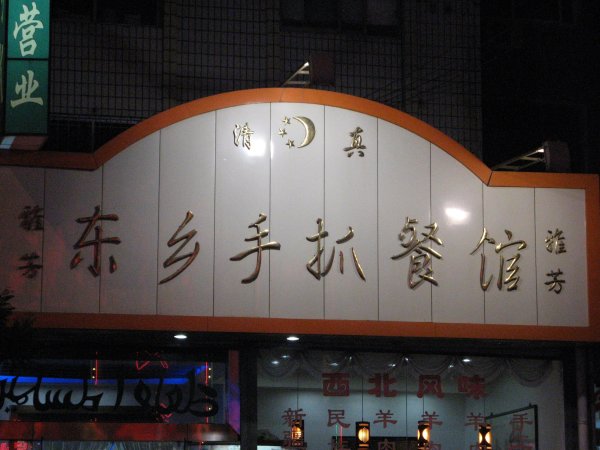

Muslim restaurants - identified by the crescent and stars. Lanzhou mosque - Yellow River in the background.Outside of the city, we went through many towns that are almost 100% Muslims. In addition, the Tibetan majority regions are marked by a decorated gateway, not a locked gate though. Is this separation by choice, or by decree? 

Muslim town outside Lanzhou Gateway identifying Tibetan Autonymous Region in GansuTwenty years ago in Beijing, we first saw our first Chinese mosque. It looked just like a Chinese temple. The only feature that distinguished it from a Chinese temple was the Arabic scripts in the front. The old Chinese style mosques are still here. But we also saw a lot of new mosques with Middle East influence, with domes and minarets. We wonder if this is an indication of the diminishing Han Chinese influence, or the rise of "Muslim Nationalism" in this region. 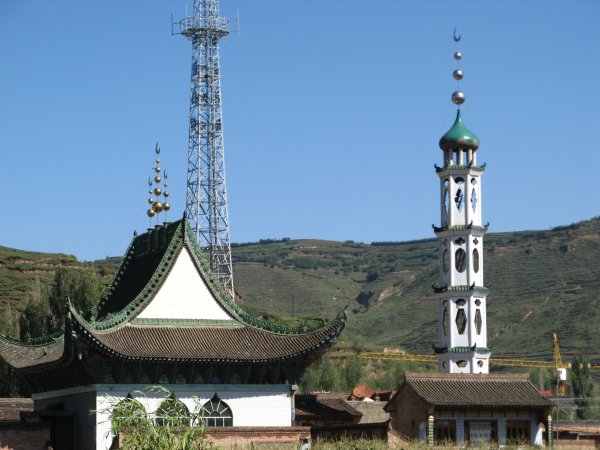
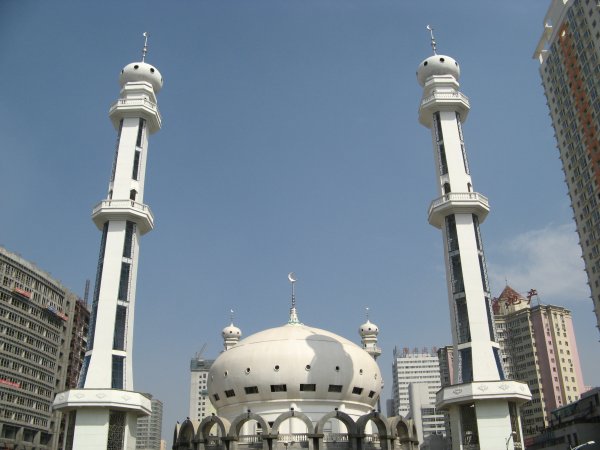
Left: Chinese temple style mosque with Chinese roof and pagoda-like minaret.
Note the cell phone tower behind the mosque.
|